
Breaking the founder bottleneck: building
a firm that runs without you
The session, at a glance
One founder's own scaling journey, from a SWOT exercise that named an unexpected threat to the hire that finally addressed it.
- A routine SWOT exercise once flagged the single biggest threat to Jessica's business: her own calendar.
- Any knowledge that lives in only one person's head takes about three years to fully transfer to a team, a clock that only starts once someone decides to start it.
- She hired a COO once she recognised that building systems and having founder vision are two different skills, not a personal shortcoming.
- Forty-five minutes into a conversation about scaling a boutique firm, AI barely comes up, because for Jessica the system has to exist before AI has anything to accelerate.
Watch the full session
The biggest threat to scaling the firm? The founder's own calendar
Every boutique consulting firm will hit a version of the same moment: the thing that won you the work becomes the thing capping how far it can go. Dr Jessica Rimmer, founder & CEO of Solomon Strategic Advisors, hit hers two years into running her own firm, which she discovered during a SWOT analysis.
The biggest threat to the business wasn’t a competitor or a bad quarter – it was her own calendar. Read on to find the three decisions she made after making that discovery, with clips directly from the session.
What Jessica's SWOT analysis revealed
Two years into scaling Solomon, a routine SWOT exercise identified Jessica’s own calendar as the single biggest threat to the business.
Her calendar was booked back-to-back, and every hour in it was implicitly a bet about where the firm’s highest-leverage work was happening. The exercise forced a question most founders never explicitly ask: is what’s actually in my calendar the same as what the business needs most from me? For Jessica, the honest answer was no.
Day to day, that showed up as a reflex more than a strategy; she was defaulting int client delivery because she loved it & was good at it, not because it was the best use of her time. Meetings were kept in because declining felt disloyal to the team or the client, not because they drove results.
The fix, she argues, isn’t a one-off audit, but rather treating the calendar as a standing mechanism to be reviewed and adjusted constantly, with fixed slots that protect the few things that actually move the business forward rather than whatever felt the most urgent.
“We did an assessment – a SWOT – probably two years ago. What’s the biggest threat to the business? And it was my calendar.”
That instinct to treat her own time as the resource most at risk of being misallocated pushed her to ask a harder question – not just how she spent her hours, but how long it would really take to stop being the answer to everything.
How long does it take to stop being the single point of knowledge in your firm?
Jessica’s benchmark is drawn from watching multiple succession processes play out in her own & other firms: three years. Any knowledge, relationship, or piece of judgement that currently lives in only one person’s head takes roughly three years to fully transfer into a team.
Getting a founder’s actual thinking – their actual judgement, not just their process – fully multiplied into an executive team takes longer still, because it needs to be demonstrated and tested in real situations before it sticks.
By the time most founders recognize they need to start transferring knowledge, they’re already burned out, which pushes them to rush the handover. But rushing it is exactly what causes the “DNA transfer” to fail. The founder exits the day-to-day, but the judgement and relationships that made the firm work don’t fully make it make across with them.
In Jessica’s view, the cause of this is timing. Founders wait for a natural pause to start building redundancy, and the pause never comes on its own. The three-year clock only starts once someone deliberately decides to start it, well before it feels urgent.
“It’s going to take you three years to transfer relationships. It’s going to take you three years to get your thinking fully multiplied into your executive team.”
Knowing the clock exists is one thing, but deciding who actually runs it – and when to bring that person in – is where Jessica’s next decision came in.
Why did Jessica hire a COO before she felt like she needed one?
Jessica hired a COO once she recognized building repeatable systems and having the founder’s vision were two genuinely different skills.
What the data of her own experience showed her was that she felt the weight of running the business by herself even with a strong team around her, because the operational backbone (the systems, the consistency, the follow-through on process) wasn’t anyone’s defined job. She was doing pieces of it, inconsistently, alongside everything else.
Day to day, that gap showed up in small, avoidable failures, like under-planned kickoff meetings and decisions about project pricing made on gut instinct rather than because the numbers supported it. None of these were big enough to trigger a crisis, but they were capping how well the firm ran.
Most founders are visionary or creative types – which is the exact profile least likely to be strong at building and maintaining systems in Jessica’s experience. “It’s not that you can’t do it – it’s that it’s harder for you.” Hiring a COO wasn’t Jessica trying to replace herself, but instead adding a second superpower the business needed to thrive.
“Most people who are the creative type or the visionary type aren’t also awesome at building systems. It’s not that you can’t do it, it’s that it’s harder for you than it is for somebody for whom that’s their superpower.”
Scaling isn’t about the founder doing less, but it is about building a system that makes the founder’s judgement available without the founder. And for Jessica, the system needs to exist before AI can come into the conversation and make things faster.
It’s the gap that CMap Intelligence is built to close – turning the judgement that currently lives in one founder’s head into something that the whole team can draw on, on a foundation solid enough for AI to help rather than just add noise.


Okay. Cool. So this week's episode is with Jessica. Be great to get your introduction first, please.
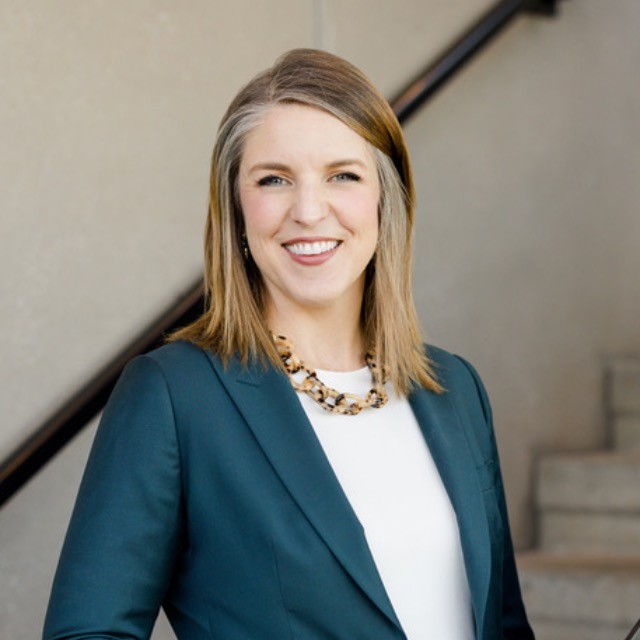
Well, Ben, thanks for having me. Jessica Rimmer. I'm in the United States, I know your listeners are global. I'm smack dab in the middle in Oklahoma. If people are familiar with the United States, I run a boutique consulting group. We do organizational development and executive effectiveness. So we help executive teams perform at their highest level so that they can lead organizations where everybody wants to work there.
And I would say I'm an entrepreneur by, duress. I didn't I didn't decide to become an entrepreneur. I didn't know I had it in me, but it has been one of the most fun things I did that I didn't wanna do is start a business, build a business, build a team.
And as for the content, how far along is the journey are you, and, how is that initial launch going?
Well, I left, in the United States, we're, like, w two employment. Right? So I left working for institutional, higher education seven years ago, and, I started consulting consulting with another group. And then four years ago, I jumped out and started my own consulting group with our methodologies. We still use some tools that we, used in our previous group, but we have some unique ways to approach the market. So four years for Solomon Strategic Advisors, which is my my group.
And tell us a little bit more about maybe some of the types of businesses that you work with, some of the problems that you solve for them.
We have you know, they always say riches are in the niches, but I guess maybe we don't want the riches because we are not niched down. We have we have lots of different kinds of groups that we work with from manufacturing to technology.
We have m and a, oil and gas because we're in Oklahoma, so one of our big industries in our state is oil and gas. So we have a very broad type of organization that we've worked in and size. So we've worked from with everyone from Google and Microsoft, Dell Thought Leadership UK. Shout out to the UK.
So we've worked with, you know, very big, very well known companies to very small unknown companies that are, you know, maybe fifty employees and twelve million dollars in revenue. So we have a broad experience base. Everybody in my group has been an executive. So we know what it takes to lead, you know, small to midsized companies.
And then, typically, in the larger companies, it's not like we're working with the Google CEO. You know, we're working with data center managers or, you know, intact teams that are doing m and a within Google. So we're niched down in that way. We'll get inside of a team and help that particular team operate well.
The larger the company, the more like an executive team, a departmental team might be. So we we solve problems like communication, trust, you know, misalignment.
Organizations get misaligned, role clarity, mission, vision, values, kind of directional statements. So if it has to do with people and culture, and it's not HR compliance. Right? We don't do HR compliance, and we're not big in the, DEI training space. So that's kind of a piece that we don't necessarily do. But if it's people and culture and helping those two things get effective, that is our lane.
Yeah. It's good to know the things that you're not focused in. That helps with the niche. It sounds like the type of people that work in your business, though, you're not following, like, a classic consulting firm pyramid where you, maybe some other seniors at the top and some mid level people and lots of juniors.
Is that fair?
Right. We're we're not doing kind of the BCG, McKinsey model where you go and you find the best, you know, business student at Wharton, and then you train them to do your work. We're not really doing efficiency consulting either. So we're not looking at, like, you can save ten cents if you buy this widget in Indonesia.
We don't do that. So we really do need people on our team who are capable of sitting side by side with an executive and making that person or that team effective, which it is possible because it's happening that you just get a really smart person from, you know, a really smart school to help you do that. But we're not necessarily trading in the we're as smart as you. We're trading in the we've been there space.
So we're really looking at we have lived experience, lived wisdom. We have frameworks that help, you know, surround the business problems that create common language.
So we're really a part of the been there group and not necessarily that we haven't been there, but we've read some books about it.
We're definitely gonna get into some of the things about how you've won some of those pieces of work and how you're finding those people as well as some of your other hires that you've made inside of your firm.
But before we go down those rabbit holes, what was it that made you take that jump from industry into consulting and then from consulting into your own firm?
Great question. It was a little bit of a leap of faith and one of those, soul searching moments that I think lots of people have across their career.
I think more people should have these moments than do because lots of people are dissatisfied in their jobs or they're not growing anymore, and they don't realize it. And that's where I found myself is I was in this space where I was responsible for a lot. I would have told you I really loved my job, but what I didn't realize is that I had gotten a little bit burned out. And so I hit one of those walls, and I had several people ask me, Jessica, what do you want?
And I was in pursuit of my PhD at the time, and, really, the only thing that I knew that I wanted was to get done with that degree. If anyone has pursued higher education at that level, it's like, golly. I just wanna be done. This is so annoying.
It's in your nights and weekends and your early mornings. I mean, I was a mom at the time. I'm still a mom.
But the the soul searching that it took to answer that question, what do you want, led me to, you know, I think I really need to try something new. I had been responsible for culture change within the organization where I was serving. I I still serve that organization and love them. I'm a member of their board of trustees.
But as I really explored the question, it it became clear to me that I really needed to go out and help other organizations. I needed to get in a learning space again where I was really challenged on a regular basis to understand, you know, that business or that environment or that problem. And so that's where consulting took me. I wanted to help other businesses make change in the way that we had been able to make change in the organization where I was serving.
I don't know if you know this, but that's quite a a different view compared to lots of other consulting founders who might start because they've got a deep technical expertise in a particular area, or they want StartFem because they come out of a bigger firm and wanna sell it back to that, or they wanna have a certain lifestyle type of business. I love the perspective that it's more about learning, and it was almost like a moment of clarity that led to that subsequent. Let's talk about the early days then. So you've gone from being in business, working consulting to now having your own firm. What were some of those initial moments like? Were there any really big learnings that you can share with other people who are on that sort of, like, journey of growing their own firm?
I kinda gave a little bit of thought to that. So the early days, it was me and two other people. You know, this was two thousand and twenty one. And at the time, I, you know, I'd been consulting under another group.
I was selling enough where I wasn't going to be able to serve everything I was selling, which, you know, is shocking. I mean, sales tends to be one of the big challenges for people who are looking to go into consulting, especially if you're going to do it on your own. You have to figure out not just how do I deliver a good product or a good service, but how do I package that service? How do I position myself?
And so I think for me, one of the early hurdles was, one, my my own ego. You know, I was like, I had to get out of my way and recognize pretty early that if I didn't position this as a business and as a firm and I just positioned myself as somebody that can help you, then I was never going to be able to scale. So I had the problem of scale in, like, the center of my vision from the very beginning because I had seen clients that I'd worked with previously struggle to scale beyond the founder. So I knew from the very beginning, I have to make this more than me.
I have to make sure that this company is about the team, that this company is about the brand, that we are clear about how we are helping people. And so I think problem number one was just, like, I have to make sure that I don't put myself in the most and highest demand position, which is challenging. If you're the person who's starting the thing, there's always a desire to have your involvement with the from the clients, but that's also a threat. And if you're like me, there it feels a little bit good.
Feels a little bit good for people to be like, well, but we wanna work with you.
And that's fantastic if all you want is a lifestyle business. It's not fantastic if what you want to do is build a business that matters. Build a business that isn't co identified with you as a person.
And looking back, you know, be as honest as you like. Did you stick to that mantra? Have you have you enabled the business to grow and and you not have to have that classic founder bottleneck and founder dependence, or are there some bits in there that are maybe a bit more of a gray area where, you know, the the love of the clients and the wanting to win the work and deliver great things meant you crept back in, then you had to remind yourself to step back out again. What was the reality?
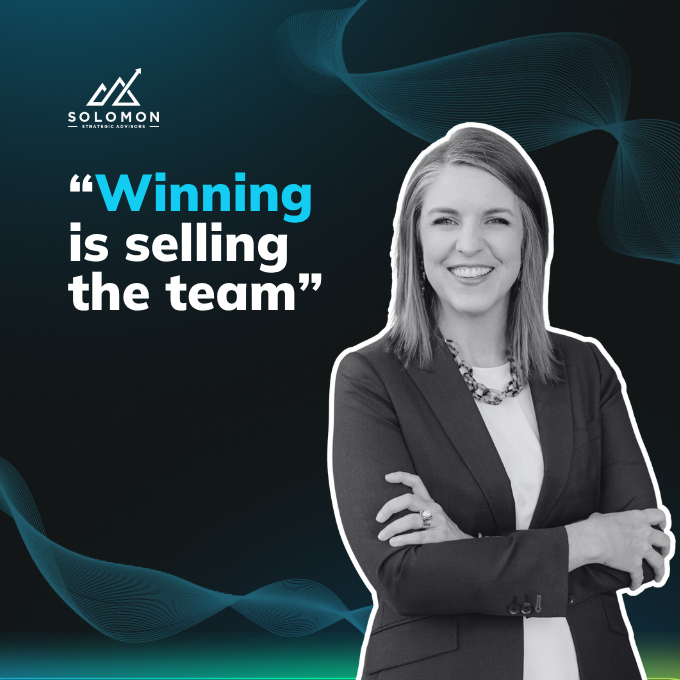
I think reality is, at least for me, maybe others didn't have to go on a journey like this, but there did have to be a moment where I'm like, nope. Winning is selling the team. Like, I had to completely decide that winning was something different than just getting the business that if winning means I always have to serve it or winning means I have to serve it by myself. Because I have kind of a model where we always go in in a team frame.
If it means I have to solve it myself or I have to always be on the microphone or be in the room, then that's not a win. And so I literally had to kinda reorient what winning is. And it took me a while before my emotions aligned to that win. But once they did, it's like, I'm disappointed when I'm having to be the one who has to be involved. Now unless this is like, Jessica, this particular thing that we sold, this is your superpower, and you need to be involved because you add the most value.
That's a different conversation than the ego conversation of like, well, but they like me. Like, I had a friend say to me, if they won't take your recommendation, like, won't take somebody else instead of you, then you don't really have the influence you think you do.
And I was like, oh my gosh. So then I had to be willing to walk away from some of those clients that wouldn't take my word for it. And that was ringing in the background is, you know what? They don't really respect me like they say they do because they won't take my recommendation.
And there's so many businesses who are of a similar shape and size to yourself, and the past couple of years has been quite tricky for them, and that founder dependence has increased.
And the amount of work that the leaders are doing in the business is is significant rather than working on the business, which sounds like is the mind is is the, like, the the the mind frame that you've got in early.
Is there any recommendations or any insights that you can share with them if they're already in the trap to be able to, like, step out?
Well, I think the challenge for many founders, at least the ones that I work with, is they don't realize that they need to get out early enough. Like, they don't realize it is going to take you three years. It will take you three years. Anything that you're doing, and you're the only one who knows how to do it, it's gonna take you three years.
It's gonna take you three years to transfer relationships. It's gonna take you three years to get your thinking fully multiplied into your executive team. Like, it's gonna take time. I say three years because that's just kind of in my experience of over over the course of time watching succession of any type is it tends to take three years if we're like, okay.
That person is not only, okay. They're better than me, or that person is, like, more preferred than me. Like, it just takes time to get people in those seats, and I find that founders are burned out. By the time they realize they need to do that, they are sick of it.
And they're like, I just want out of this. I just need to go get someone who and then they lose the DNA transfer that is transferred over that time period. And so, I I mean, I don't know that that answered your question directly, but that's been my observation.
It does. And I think the learning might be then, like, you have to commit to that process and understand that it would probably take longer than you want long longer than you probably expect. But if you want that sort of outcome, then that's the perseverance that you're gonna need to to go through that and find the people who can step up and take on responsibilities, and there might be some bumps along the road. No doubt.
Let's talk a little bit about, you know, post foundation. You're in you're in scaling mode. You're growing really nicely. What are some of the challenges been in in you know, at any point in the journey? What are some of the key ones that you'd be happy to share?
Well, I think, you know, to the point of scaling mode is you have to work out of or I I, at least, found I had to work out of preference a lot. So I have preferences for how I work. I like thinking by myself. I like working by myself.
I like, you know, I like coming up with a nearly completed product before I get input. And all of that is antithetical to collaboration and to growth. And so I think I don't know many founders, but other other founders might find that that was a threat for me. So I had to work out of preference a lot, which meant I had to pay attention to my energy levels because collaboration is literally hard for me and irritating.
And so then I'm like, okay. How do I show up in this space in a way that allows me to bring my best that also allows other people to bring their best? So working out of preference, I think, was a big has been a big challenge. Now now that I'm doing it, my team is like, oh, no.
You're so collaborative. Like, you're you're such a collaborative leader. We just did this exercise recently, and I was like, this is so funny. Because four years ago, if you talk to a couple of the the on the ground team members, they would watch me just like, guys, this is driving me crazy.
This is painful. I mean and I would verbalize that stuff, and thank god they stuck around because how rude. But, that that stuff, like, working out of preference in order to serve the business well was a big learning and a big challenge.
How did you do that? Would was there some, like, some assessments or something that you do to find that information out?
Yeah. That's part of the work that we do. So we use some tools with, from a group called Giant Worldwide, which is a group that I joined that the consulting group initially. So ten years ago, I started working with their tools, and they were transformational.
They were transformational just leadership frameworks, collaboration frameworks. So one of them is called the five voices. And it's like it's it's not similar to StrengthFinder's, but for the sake of categorization, StrengthFinder's DISC, MBTI, any of these kind of personality assessments. But what five voices offers is it's a way to understand what other people need and what you need and how to shift.
And I happen to know that based on the leadership voices of my team, everybody on my team was super, super collaborative. And so I knew just, like, functionally, I had to shift. But they we also had language for the way that I show up as kind of that future oriented, super creative person. So the language, the shared language helped us navigate some of that and just verbalize.
Hey. I'm knowing myself to lead myself. I'm in conscious competency right now. Hold on. Let me spell this out.
Like so the shared language is a feature of the kind of work that we do, and so we use it with ourselves. Like, we use it with our team.
Okay. It makes sense why you've got a little bit of a cheat code on that one then. It's like, I had I a podcast with their sales and marketing, consultancy, and they were installing the virtues of, like, embedded sales and marketing in their business. I was like, we this is you this is what you do.
So it's kind of like, it makes sense that you benefited from that to that same degree. If we if we can, I'd love to actually dig into that a bit more because it just sounds really interesting. How does that influence then your day to day? But, also, how does that maybe influence some of, like, more of your strategic thinking about maybe who you would hire or if if it does at all?
It does. So everybody on our team gets certified in this toolkit. So you get certified in five voices. There are certain tools that are part of the toolkit that you you can't really know in the way that I know them just because I've been around forever, and that's some of the benefit of working with our group.
And so this language is part of the backbone of of how we operate together. And pretty well, everybody has had some level of exposure. Either they were my friend, and so I was busting out the toolkit at lunches, or they have been cons like, consulting clients at some point. So my COO now was actually my very first client, and I did not steal her for anybody out there who thinks that we might come in and steal their clients or their team members.
I didn't steal her, but it she had been twenty years a part of this organization that I I was their consultant, and that was a while ago. And she came in, and she goes, you know, it is pretty amazing, the team that you've built and how true how truly you live out the tools that you teach. And that congruent is a little bit the part of, like, my personality and my makeup. My leadership voice fights hard for integrity and fights hard for congruence.
And so I don't know that I would be able to teach something we didn't also live, and I don't know that people would do well in our organization that didn't align to the culture that we have created. And it's not a cult. I mean, it is just there is a relationship between cult and culture, but there is you know, the culture that we have is aligned to this idea of liberation, which is fighting for the highest possible good in the lives of those that you lead. And so we try to do that for one another.
We try to look for people to be a part of the team who that is also a part of their personal ethic.
My job is to fight for you. So there you cannot be selfish and be a part of our organization. You cannot be selfish and serve clients well. You have to be orienting yourself to be a liberator for other people.
Have you ever found somebody, though, who, like, on paper looked incredible? And then presumably during the interview process, you have an assessment you have them take the assessment, and then you realize that that's not gonna be a match, and then you've had to look at other candidates.
Hire slow. You know, you gotta hire slow. So, also, I think I really have transformed my mindset as I've worked with these tools over time. I no longer think that me, myself, and I is the best point of reference for hiring.
And so I wanna say in tribal leadership, which is a book I read a long time ago, they were talking about, oh, a very large company like Google or IBM or Patagonia, something. And they were extolling the virtues of group input in the interview process. And so one of the things that we try hard to do is we wanna kinda work with somebody before we work with them. So we want to have had some way of observing them, working with them, which could mean they used to be a client, and now they're retiring or now they're, you know, completing their cycle and now they're apart, or we've had quite a bit of exposure to them.
So our team right now is still pretty small. We have twelve consultants, and we have a few back office people. But because we are essentially going through, like, through an immersion process before we decide to bring anybody on, we don't make a ton of mistakes.
I I will say there there's also a lot of open conversation about people's superpower and the work that's energizing versus draining and making sure that we're utilizing one another well. And so a lot of that just open conversation stuff is a part of good matching all along the way. So correcting course all along the way.
But we've gone down this rabbit hole now, and I always promise myself on podcast not to go down rabbit holes. But but we're there because it's personally interesting. And I'm sorry, dear listener, if this is not your thing, but bear with me. So when you're when you're, like, actually sort of looking at these organizations, you haven't got this type of thing embedded.
And I've not done a DISC thing for, like, probably fifteen years, what is why why why isn't this done more? Like, why isn't this, like, more why why isn't this more common? Is it you know, is it an awareness thing, or is it a cost thing? I I genuinely have I have no idea, so I'd love to know.
I think that's a great question. So we're trying really mostly to work with people who already understand the value of culture to strategy. So our avatar, our client avatar, is really focused on people who already get it to some degree. But there is a world.
There is a world of leaders who don't recognize the influence that they have on their own culture. They don't recognize that following them is miserable. They don't recognize that the student or that the student that the that the employee engagement crisis is to a large degree their fault because it's the culture they're creating and allowing and setting. And so I think there's a lot of hand wringing out there of, like, why can't we get good people and what's wrong with Gen z?
So there's a lot of critique going at the workforce from the leaders of organizations who are in the category of, we think this is soft and fluffy. We think people ought to just assimilate. We think culture should be organic and not intentional. Like, there are a lot of myths in the market, and it's expensive.
It is expensive. I would say the cost of unhealthy culture dwarfs the investment in intentional culture.
However, people who are not ready to hear that message are not ready to hear that message. So we try to focus on groups that, like, they understand baseline culture matters and leaders matter.
How then do we create common language? How do we create health? We are we know how. We know how.
I love the fact that, like, you actually, during your own sales discovery process, you obviously have a really clear idea of your ICP, and, therefore, it's not your job to inform the world of this. This is what you should be doing. You gotta you gotta find those people that are on board because, otherwise, your your sales process is gonna take forever, and you gotta convince people to buy into something that they've got no awareness. So so I love I love the insight just for that alone, let alone the actual insight into what the topic we've just discussed. Maybe I'll step back out of that then. Thank you for thank you for sharing that.
Yeah.
Back to back back to the main main flow of the podcast. I told you there'd be bits of the marketing team we're gonna cut off from me broke. Go off on one. Okay.
So done a little bit of challenges. Okay. Yeah. I'm gonna go back into the second area now just in case you also lost track of where we are.
How do you balance the client delivery work that you do do with building infrastructure beneath it?
Man, that you know, back to the threats, we did an assessment at SWAT, you know, probably two years ago, and it's like, what's the biggest threat to the business? And it was my calendar. It was like, my calendar is the biggest threat. Now I'm always gonna call back the team. I'm always gonna call back a client, but my my calendar even still tends to be back to back to back, hour to hour to hour. Now it's deciding how how do we make sure that what's in there is priority.
So I think there's a constant review and a constant adjusting to the calendar. Like, the calendar is the primary mechanism to make sure that I'm spending times on the on the right thing. So we've looked at meetings. I mean, this is basic executive stuff.
Right? Like, what meetings need to be happening on a regular basis to cadence out the right things for the business? Is that meeting effective? Is that meeting driving the right results?
So but, originally, I was, you know, eight to five, Monday through Friday, working on client work the whole time.
And I would, for sure, fit in a sales meeting, but every other kind of meeting felt like, I don't wanna be in this meeting. So I had to, again, emotionally adjust to what was necessary for the business and also adjust my calendar. So now I try to spend, you know, calendar blocking. I try to spend certain kind of days doing certain kind of things and then client delivery smushed into, you know, specific spaces. And then I try to get out of client delivery as fast as possible. Like, as I'm doing a lot of the selling and so are there are several members of my team that do selling. I try to make sure that in the sales process, I'm talking about, here's how we do client matching.
Here is who is on the team. Here is how and I'm trying to prime the client to expect that we're going to match them with the perfect people, which presumes that that perfect person isn't always me. So we try really hard in the sales process to think who needs to do this work, who's gonna deliver the highest value, and how do we make sure as few times as possible that the answer is me? Because my highest and best use is really focusing on how do we keep this business growing, how do we build the talent network, how do we continue to get repeatable revenue, how do we build the right partnerships, what is the vision, how are we speaking on the right stages so people are seeing us, how are we positioning the brand.
Like, that's the highest and best use of my role. So if I get sucked into not sucked into because I really love serving clients. But if I do too much client service, then that role of being the CEO of the business is gonna suffer. Nobody else is doing that unless I'm doing it.
One of the other interesting things that, I know about your business is you brought in a COO relatively early. What was behind that decision? What was the impact that that has made?
Yeah. What was behind it was, I just felt immense weight of the business. Like, I just kept waking up feeling like even though I have an amazing team, the, like, real running of the business, I felt by myself. Like, I'm doing this by myself. It depends on me. Now some of that was perception and not reality, but I really did need someone who was focused internally and better than me at building systems.
Most people who are kind of the more creative type or the visionary type aren't also awesome at building systems. It's not that you can't do it. It's that it's harder for you than somebody for whom that's their superpower. So I knew I needed somebody who, like, eats and breathes process and system and scalability and organize it.
And, it was just kinda that who, not how mentality that Dan Sullivan will talk about in the strategic coach program. Don't ask yourself, how do I do this? Ask yourself, who can help me? And it was very clear I needed an operational leader to sit right beside me and multiply out the effectiveness of the business.
And so, initially, I hired someone who's, like, my nearly direct opposite of a personality type. I hired someone, and she was in Albuquerque, a dear friend of mine. And she came to my house, and we would whiteboard everything. I mean, the number of times we whiteboarded out my brain was like it was a lot.
I mean, there was whiteboards on my fireplace just working, working, working, creating lists, getting those lists worked on. And then we hired someone to replace her because she was always going to be temporary who has just taken it to the next level. And she's also very different than my personality, but she is able to see things I don't see, pick things up, and make them lighter. And so it's just it's made my quality of life better, but it's also made our business more sustainable.
Can you pinpoint any particular things that, like, maybe post COO ops leader have improved or have just you know, you talked about that, the reality versus reception, or you just feel is is better sitting with them than you than you had?
This is so particular, but it's creating distribution sheets. So, like, how like, each project, how are we gonna make sure that it's profitable and that the right people are assigned to it and all of that? We have kind of a sheet for that that we built in the systems building process that we went through. And I was doing those, but I would I would procrastinate them, and then I there's a communication process that has to go alongside them.
It's like, okay. Saturday morning, I'm in my house, you know, creating the distribution sheet and sending out the emails that's like, hey. Here's what it's gonna be. And it just was like, you know, there was just critical failure points written all over it.
Falling down on, you know, making sure that kickoff meetings were really well planned, all of that now is not something that I do. And so it means that projects well, I can still decide, oh, man.
We're gonna do this project for less money, and we're gonna, like, squeeze the profit margin on it. Like, she's gonna keep me a lot more consistent because sometimes I do that because I feel bad. And sometimes I do it, and it's not strategic. And I'm just being a you know, I'm being accidental, and she'll keep me really focused on, like, okay. Here's where we are. Here's our profitability. You know, now make the decision.
Are there any other things that you've done that have been really high impact that you look back and I'm like, well, I'm so glad that I bit the bullet on that one. And if not, conversely, any things that, like, you're struggling with at the moment, you're just like, I need a solution for this. What do I need to do?
I mean, I always have dissatisfaction. It's just kind of the way that I'm wired up. I've learned to appreciate it and just put it on the list. But I would say high impact was, I made a choice to have invest in marketing.
And I've had, you know, two people at this point, and both of them built on each other. Like, everybody who has served the business has been to the right person for the right time. You know, it's been really just timing. And I try to be really open handed with people.
Your life is a journey. I'm not in charge of you. I am blessed by you coming through my business for a time. And so I had an initial person, and then we had someone join the team.
And she was just kind of a wizard, like, could figure out anything, was really good at Canva, really good at, you know, just whipping things out just to get it done person. And so she has been a major lever.
I wrote a book this year, and I would have let it sit on the shelf, and my mom and dad would have been the only people to read it. I mean, I just genuinely would not have launched that book very well at all, and we're still in the baby stages of that.
But she, like, she makes me feel like we can do it. Like, if Sophie's involved, we can do it. Also British, so congratulations to the Brits again for the second time on this podcast. But she is she's been a game changer for our business as a whole, both morale, but then also just elevating the brand, elevating the standards, getting things out out into LinkedIn, out into our email newsletter. So she is a every dollar I've paid her is, you know, not enough.
Do you feel like all of this comes back to that initiation moment when you started the firm and you real you you set it out with purpose to not be the bottleneck, is it as intentional as that, and is that something you're continuing to push forwards with, or is there some other strategic element that has impacted the timing of when you brought these people in, like an inflection point or a certain amount of revenue or a certain client?
I don't know that I have, like, something that's so mathematical as that. What I was telling the team this morning, we had an opportunity over the last two weeks to we're gonna run somebody else's business for them while they took a government office.
And the only reason that we were in the position to do that so we're running our business, and we're gonna run their business for them and make sure that it keeps making money because government doesn't pay you anything. And I was telling the team, the only reason that we were in the position to do that is because we have invested in relationships. Like, it is literally the currency of love, and we try to love one another really well. We try to love our clients really well.
We try to make, you know, smart, but smart relationships where we're really investing. And, investing. And, again, back to that fighting for the highest possible good. So I think that there is there is something that comes back to you from just doing the right thing and from loving people well, which is not the easiest thing to do.
Like, business is hard, and you get cranky, and you have to make tough decisions. And things do not always go high into the right. And so I think you have to fight for love and fight for loving people in the business, and I think that's the investment that creates future opportunity that continues to echo.
Just to you mentioned going for government office. Does that mean, like, becoming a senator or something along those lines?
So he was tapped to be the top leader in in our state for education for so somebody got, somebody tapped out of their term. So there's fifteen months left on the term. So our friend, he was, asked to come in and step in and finish somebody's term to lead education in our state at the, you know, state level.
So it's I understand.
It is an elected position, and he's not you know, it's not something that he want he's not a political person. He's just a very good person who is very smart at education and is the right choice for the right time. So, yeah, that's that's the situation.
The power of the network. I love it. Back to the founder bottleneck piece. So there's two things that I'd I'll ask you the easier question first, which is you you're obviously very rigid with your calendar, and you mentioned something about, like, building a set of k a cadence around certain things that are high leverage. Do you mind sharing, like, some of the things that you have on your calendar that you absolutely stick to and maybe the frequency that you carry for those forwards? There may be things that, like, benefit you or impact your team. I know that's really specific, but would like to know.
I I'm, like, hyper about the calendar. I think your calendar is your time manager, but I think it's your energy and priorities manager. So I'm hyper about the calendar. And so every Monday morning, we have a sales meeting. It's thirty minutes, and our agenda is very straightforward. What are you celebrating?
And that is things that are closing or things that are making significant progress. What's in the pipeline? And then where where are your hurdles? And it's just thirty minutes, and we get on, and we talk, and, get through our stuff.
And it's just good reminder. What was happening before we had that is we're just kind of, you know, messaging in. We had stuff, and I would forget what we had in the pipeline, and I would forget to up update the CRM. And so we have a Friday calendar slot that's like, update the CRM, and then we have a Monday sales call.
And we just you know, that's our ping back and forth. This today was a huge things that we are celebrating meeting, and I ended the call by saying, well, today, we closed a lot, which means next month next Monday, we're talking about pipeline a lot. You know? Because you don't that you don't close things every single Monday.
I mean, with as many people as we have, you can close something every single Monday.
But it's a you know, that that meeting is really important both for energy setting and for just getting the right activity going every single week.
We have an op I have an ops meeting every Monday. I have an scheduling meeting every Monday.
We have a team meeting every other Monday. So Monday's internally focused, typically, minus this. And then we have quarterly training where we're focusing on training something around product or something around service.
We have twice a year, a retreat of some type, which is a longer time spent together.
Usually in town, but, you know, we may get exotic at some point if we hit some revenue goals.
And then trying to think what else. I mean, that's really the cadence of what keeps our team healthy. We could probably get together and have a team meeting every Monday. But, again, like, my calendar as the threat, every other has worked fine for now. And then we do meet periodically with, you know, renewal time lines on clients. Or when when people are running a large scope of work, we'll have periodic kind of, like, portfolio meetings where we're paying attention to what's going on in particular clients. But that, again, is the benefit of the COO because she's got eyes on that all the time.
The second question is this hiring slow philosophy and the observational piece that you do before you bring somebody into the business, because you're growing and likely to continue to grow, like, when do you feel like that becomes a challenge, and what do you do to resolve that challenge? Because it I'll be quiet because that's that's Yeah. Essentially, we it's your knowledge.
Yeah. Here's what we're doing to resolve the challenge. So, essentially, what we're going to be building, what we're working on in concept, not in execution right now, is building a talent network, which would be people that are not a part of our team on a regular basis, but they're people that we pull in to expand capacity or people that we pull in for projects. And then we may ultimately pull them into retreats. And so it's thinking ahead, very similar to the founder bottleneck of developing people.
It's thinking about talent ahead of time. Now I know that my gut cannot always be the, like, indicator of what the right next type of person is. But right now, again, size wise, my gut is the, oh, we need somebody who can, and I have that in my gut. So our practical strategy to go past gut is to develop a talent network where we're, you know, doing some relational engagement. We're inviting them to retreats events or things that we can get some immersion. And they know us. We know them so that if we need to leverage up and invite more team members along, that we can.
And now you're on this journey, and it sounds like one that maybe you hadn't anticipated. Like, what does success look like? What what what's the what's the ambition with the business?
Initially, the idea was I wanted to, create opportunity for people who weren't necessarily salespeople but were fantastic at delivering service. And so that was really what I wanted to do, create opportunities so big that one person can't serve it by themselves. So I think the ambition right now is to continue to scale our baseline client, raise the floor on revenue, scale our baseline client above where we are right now so that we're serving larger clients smaller number of larger clients. Now smaller number, I don't know.
I'm not very good at shrinking. Like, that's not a I don't have that mindset very well. So, like, that principle of focus is very I'm I'm cautious about how we do that because I'm kind of a, like, yes, and we'll figure it out person by nature, which can cause chaos to the business. So my ambition is to still continue on in that.
But I think whereas I initially, I'm like, oh, I could probably build a five million dollar business. Now I'm kinda like, I think I have a pathway to twenty million. Like, I think I understand how to get there.
But I understand, I think I kinda sorta have a a map. But the other piece that I have to figure out how to leverage is AI for value creation, AI for keeping central administration really tight, as we're scaling to that twenty million dollar space.
Forty five minutes in the first mention of AI. That's gotta be some sort of record. But you're you're you're spot on. I think that's definitely something that everyone is keeping a a close eye on right now.
I see it actually more in North America than in the UK. In the UK, professional services businesses are still very, very people centric, and there hasn't been that collapsing of the pyramid or changing of an org structure. But in North America, there's definitely some firms that are highly tech enabled, highly highly AI enabled. So, yeah, I think that's definitely the next frontier.
Okay. Perfect. What what else are you doing in the business, sort of maintain this culture, to maintain that connectivity as you grow?
Good question. I mean, I think very practically, back to the tools, you're gonna think we have a cult over here, but we try to really make sure that we're spending sufficient amount of time relationally. So we start every meeting with some kind of, like, what are you celebrating? What's going well for you?
You know, we try to make sure that we're, setting aside time. One of our team members just moved to Washington State, and so we did, like, a bon voyage. You know? So it's like it's trying to make sure that we don't miss the milestones of one another's lives and that, you know, while we we may not have been, you know, real life friends before we started working together, we want to be real life support in a real life network.
So it's it's just paying attention to one another's lives and celebrating the things that are going on. And, you know, not everything is celebration worthy. So sometimes we're praying for one another. Sometimes we're, you know, carrying the burdens of one another.
That's that's a way, a practical way that we're, I think, continuing to perpetuate the culture of fighting for each other.
And this book that you've written, it's the basis, as I understand it, of a a further ambition, with a project that you're undertaking that's sort of, like, embedded within the business as well. Can you share some details on that?
So I wrote a book called the purpose formula, and it's the idea that everybody has a unique purpose. Everybody's different and diverse on purpose. So it's design desires and disappointments. Those are the three elements of the purpose formula.
And, I've been speaking on the topic just a bit on a few podcasts here and there. So what we embarked on on Friday was a mission to a million. So we're trying to get one million people fully alive, living their purpose, and we're starting to collect one million purpose statements as of Friday. I think we have, you know, ten as of Friday, but we're gonna get, a ticker up on the website, and you can hire us to come and help your organization do a purpose workshop.
We've got a college student pathway that's called purpose and path where students are in that space of life. But, interestingly, individuals don't necessarily, find their purpose until around age sixty, sixty three. And so that journey can really be a lifelong journey. And you might go, well, why?
Why do people find it so late? And I think, one, we we can get a lot of meaning from our work, and then we'd stop getting meaning from our work. And so that wall that people run into causes them to ask deeper questions. So we're just trying to get people to ask those deeper questions earlier so that they can bring that energy into the work that they do.
They can bring that energy into their homes. And so we are on a we're on a mission to get one million people living on purpose.
I love that. Absolutely. And is is that part of the work that you're doing as well then? It sounds like it is literally part of the services that you offer.
Well, we're we're gonna make it. So, I did I spoke at an event on Friday, and most of the team was there. And I was like, don't you guys think, like, we can just this is easy. You can do this too.
And so, again, it's thinking past, like, don't don't put it on you. It's like, how do you turn this into something that anybody can lead people through? So we are gonna be developing an online course, a book club guide that people could read the book together in groups. We've got a workshop already called Leading with Purpose that's really focused on leaders.
And then I I have some other ideas of ways that we can really help people get all the way to the anatomy of a purpose statement and how do you how do you build a purpose statement that really compels your life?
To get to a million, it's almost like the perfect representation of not being a founder bottleneck because the only way to do it is by having it something that's truly scalable beyond you.
It's a great thing to say.
Yeah. I hadn't thought of that, but that's absolutely true. I absolutely cannot do this if other people don't get involved.
It's been an absolute pleasure.
Thank you for allowing me to go down my little rabbit holes and get some personal I would say joy is definitely the right word, but also just learning as well on a a topic that I really didn't have know much about.
Anything final from you that's and if if not, we're gonna put all your contact details in the podcast, and there's gonna be lots of other ways people can get in touch. But any final bits from yourself?
Just I had fun too, so thank you. It was really a good time.
Cool. Thanks, Jessica.
Join the story live
Sign up to upcoming webinars and live demos with industry experts
The eight-figure wall: Why consultancies stall & how to break through
See the firm that doesn't run on its founder. 2-part live demo series.
Ready to transform your operations with CMap?
CMap replaces your existing homegrown systems, centralizes your data, and solves your ops pain


