
ConCon26: Elevating operations from back office to front-and-center
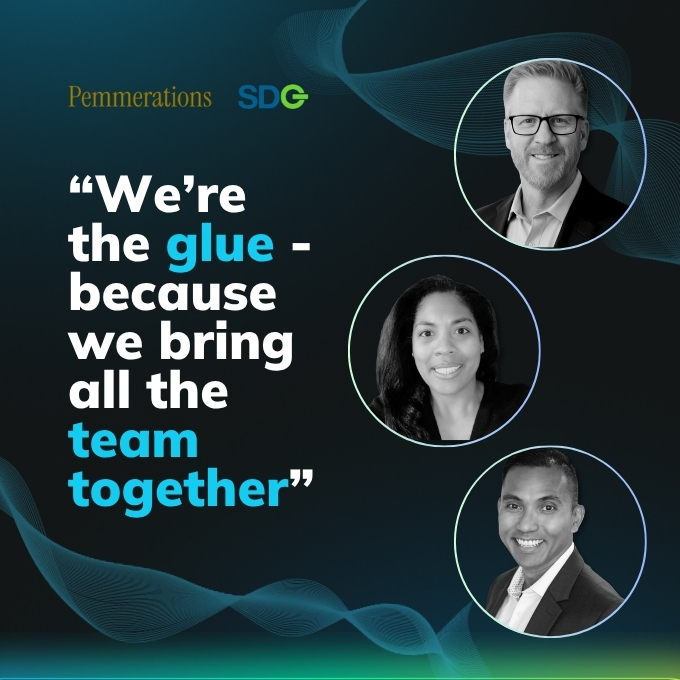
The session, at a glance
Three operations leaders compare notes on what it actually takes to move from back-office function to strategic partner. Here are some of the key moments & findings:
- “Where are the dead bodies buried? Randell identifies the real risk in a growing boutique, which is the gap between what finance reports and what a project actually delivered.
- One panelist took a firm’s P&L from zero dollars to $30M by fixing people and culture before touching any tools or systems.
- Some boutique firms have spent $100,000 implementing a tool before anyone had agreed on the problem it was meant to solve
Watch the full session
There are dead bodies buried in your data – and operations are the only ones who can find them
Every consulting firm eventually asks: is what we're seeing in finance the same story the projects are actually telling?
For a founder-led firm scaling past its early years, that gap is where the real risk lives. Three operations leaders - Maria Recker of SDG and Randell Mauricio and Brian Albers of Pemmerations - spent an hour comparing notes on exactly this gap, and on what it takes for operations to move from back-office afterthought to the function a firm actually runs on.
The single biggest finding: operations earns its seat at the table by closing the gaps between parts of the business that were never talking to each other. In the next five minutes, you'll get the three places that shows up most, with clips taken straight from the session.
What happens when a firm’s finance and delivery teams tell two different stories?
The real risk in a growing firm isn't visible in the finance report or the project report alone. It shows up in the gap between them – as Randell puts it, "Where are the dead bodies buried?"
He’s talking about the mismatch between the story finance tells at month-end and what a project's actual outcomes say happened. And he’s seen this play out repeatedly across the boutiques he works with: finance closes the books on a schedule, while project delivery is generating a completely separate account of what actually happened, and the two rarely get reconciled in real time. By the time anyone notices the mismatch, the decision that depended on it has already been made.
Day to day, this looks like leadership making calls off a month-end report that's already stale, missing what's overdue, where a team is lagging, or which project's margin has already slipped without anyone flagging it. Waiting for the monthly close to catch a problem means, in Randell's words, "finance is too late."
The cause, he suggests, is treating finance data and project data as two separate systems reporting to two separate audiences - rather than two views of the same underlying business that need to converge.
You don’t solve it by picking one dataset over the other. You need to build the real-time convergence between them, so leadership is working from what's actually happening rather than what got reported last.
"It's where are the dead bodies buried, and are those dead bodies being recovered, identified, and the data actually merged together. The story that finance tells is different from what the project results will tell you."
Closing that gap is the raw material. What a firm does with it, and who gets to act on it, is what earns operations its seat at the table.
What actually earns operations its seat at the table in founder-led firms?
Operations earns its seat at the table when it stops being the function that keeps the lights on in the background and becomes what Randell calls the "force multiplier." AKA, the team whose work makes every other function in the firm more effective, not just its own.
Maria's own phrase for it is "the glue”: the function that pulls sales, delivery, and finance together around one shared version of the truth. But while being the glue is necessary, it’s not sufficient. Operations must also become the multiplier that lets everyone else in the firm do their best work, because they're no longer operating on incomplete or conflicting information.
Inside a boutique this looks like the unglamorous work of evangelizing - department by department - why the data matters. Maria describes tailoring that message by audience: sales needs to hear how clean CRM data affects their bonus, project managers need to hear how it affects their budget and utilization, finance needs to hear how it affects invoicing, and so on. People will only adopt a new way of working if they genuinely understand what’s ‘in it for them’.
What causes operations to stay stuck in the back office, in the panel's view? There’s a missing visible connection between the unglamorous daily and the outcome that work drives. Close that connection, and the same team that maybe used to be seen as a "nuisance” becomes the one everyone else depends on.
"That's where we come in. We're the glue. We're the glue to all of this because we bring all these team members together to collaborate."
Earning that seat at the table is only half the story. The other half is what happens when a firm reaches for a tool to help, before it's actually done the work this section describes.
Why do so many boutique firms' tool investments fail to fix anything?
Boutique firms' AI and software investments fail most often for one specific reason: the firm reached for a tool before agreeing on the actual problem it needed to solve.
Brian explains: AI is a great solution, CMap is a great solution, but a firm has to start with the problem, not the tool. Knowing the right problem means understanding your utilization, your profitability, your pipeline, and where your time is going before any tool gets chosen to address it.
Randell has watched this fail firsthand, including with firms that grew into billion-dollar valuations: teams with genuinely great software, but no clearly defined problem underneath it. He's seen boutique firms spend $100,000 implementing something without ever fully understanding what they were implementing.
He offers a specific version of this same mistake as an example: a firm is struggling to get its team to track time properly. Their instinct is to buy an AI tool that automates the tracking away. But that's rarely the real problem.
If a team is struggling that badly with time tracking, it's usually a change management or cultural issue rather than a technology gap. In his own experience scaling a firm's revenue from zero dollars to $30M, and from 10 projects a month to over 300, the only way that worked was starting with the people and making sure they understood why the process mattered before asking them to follow it.
"We have to start with the problem. What is the problem we're trying to solve, rather than let's just plug in AI or let's just plug in any tool?"
Operations earns its seat at the table by closing the gap between what different parts of a firm can see, then turning that shared visibility into something the whole team, not just the founder, can act on.
That's precisely what CMap and CMap Intelligence are built to support - giving operations the real-time, integrated foundation that makes the rest of this conversation possible in the first place.


And here we have well, hello, everybody.
Hi, Ben.
Hi, Marie. Hi, Brian. Randall. You've all got really similar backgrounds. Are you, like, two are you, like, three rooms apart from each other?
Operations people, we coordinated. You know?
Right. Yeah.
I just forgot my creations hurt.
Okay.
Just a quick one. So has before we get started and before I go into the session, just quick one from the speaker side. If any of you have got multiple Riverside tabs open in your browser, you may not, please please remember, just have this one. It means the streaming quality for our audience is superior.
And we will be doing intros in a second, but for for the audience so as I mentioned just a second ago, the topic for this is grinding, shining, elevating ops from back office to front and center. And for for CEMAP, for us, this is sort of like this is our bread and butter. It's it's really cool and really interesting to talk about sales, and we've talked about positioning and marketing. What else have we covered?
AI and exits. Ops elevating ops is, like, what our platform at least exists for. So excited to get into that and a few different topic areas that we're gonna be covering. Before I before I go into the structure and share with the audience what we're gonna be covering, why don't we do some intros?
Brian, if we can start with you, and then, Randall, if you can follow, and then Maria, if you could bring us home, share the audience who you are, what you're doing, a little bit about your firm, the back background as well in the industry, that'd be a great starting point. Thank you.
Yeah. Awesome, Ben. Thank you for for having me here today. I really appreciate it. Appreciate the time.
So what I do is I I love working with founders. I love working with founders who are ready to scale and wanna eventually exit their business. They wanna grow. And so what I do is I help come in and give them time back.
Right? We set a focus for them on what they're doing in the organization, and then we focus ourselves on results. And so that's what we do at Permerations. We just really love that aspect of the business.
We're not necessarily out there in the front for the limelight and, you know, getting our face out there, but we love the back the back end piece of it and making sure that's running effectively. And we've done this for dozens of firms now.
Started probably about twenty ten with a company called Lightly Treading. They're a building science company. And I was working with the founder there, and he loved to be out and about and talking about building science and be the front of the company. But the back end stuff, he just didn't care about. And so I took it on, and I started operating and executing and delivering on different components, within the organization. Since then, again, if it's been dozens of different companies, been able to do that and helped three exits so far and have another two that hopefully will exit in the next year or two. So, been quite a journey, and I really love doing it.
Very cool. Thanks, Brian.
Yeah. Yeah.
How do you how do you follow that?
That's a great summary.
So I'm Randall Mauricio, managing partner at. Brian and I met, like, maybe two years ago.
And, we both gave each other the Spider Man meme because we looked at each other and says, hey. You you do the same thing, and we came from the same walks of life. And the shared passion, the shared purpose is what Brian had mentioned is we love empowering and being serving as that, you know, second in command and really freeing the founder and and the founder of founder CEO of professional services firms. It's not just consulting firms.
It's agencies. It's MSPs. But that's the past live life that Brian and I had held, and we kinda came together and thought of, hey. Let's create a a boutique consultancy, really placing and helping founders through embedded leaders.
So that's what we do. And, you know, as as I listened to Brian, the one thing that I could think of that I could probably put out the table just so uncomplimentary to what he shared is that, I love sharing the birth or or the or or how, came to fruition, and that's through Brian's two loves, operations, and his daughter, Pema.
And to put that together, Very nice, Randall.
Nice.
Yeah. That's very nice. Aw. Maria, does SDG stand for anything emotionally linked?
Actually, it is the founder's grandmother's mother's initials. Now don't ask me what that is, but we've been in business for over thirty years. So I'll tell a little bit about my blurb. So I'm a reorcher. I'm a director at SDG. I'm part of the operations team, but I also just transitioned to leading our North America PMO and our US managed services team.
So fortunate to work with Maria SDG, you're a client of ours in North America and also Transatlantic as well. And as she mentioned, five hundred odd people leveraging our platform. Randall and Brian met through multiple boutique consultancies who leveraged their services to help them scale and grow. We'd be the various communities together and all produce various bits of content as well. So if you like what you hear, there's plenty more of that where it came from. So in in the actual session that we're gonna be running here today, we've got a few topics I'm gonna be asking our panelists some insights on. So what's the impact of AI on running the firm?
How to perfect that delicate balance between leveraging data and insight and sort of, like, founder leader's gut feel and natural instincts. That's often where ops can start bubbling up in terms of being way more relevant and prevalent in a firm.
Maybe some focus areas of personal development and the future of what ops looks like, particularly within our context within boutique consulting firms. As ever, please do ask questions, use the chat or the q and a, to do that, and I'll weave them in as we go forward.
Let's start it off, though. I've asked this in similar you know, previous sessions, like, for a hot take. So, Randall, to you first, what's your hot take on where ops and finance leaders are getting stuck in that back office perception?
Yeah.
This, happened to me just the last couple of days, so this is an easy one for me to answer. It's where are the dead bodies buried?
And are those dead bodies being recovered and identified and the data or the bodies actually merged together.
The story that finance tells is different from what a project will tell you or the project results, if you will, the project outcomes. Ben, you and I have had this conversation so many times. I'm a big believer in PSAs.
I love CMAP. I'm a user of CMAP. There's instances where I've helped to implement it through some of the operations clients. And there's there's instances where it wasn't the right fit, and they put that on the table because it all depends on the sector.
We all know that that CMAP is tailor made for consultancies, and the data that you you can you you can extract from that is so powerful.
Now back to your question about finance, that tells you one story and projects tell you another. I think I think there's a real convergence of those two datasets giving you the real story of what's happening in your business, not just the result. I often find, and and I'm sure there's a lot of people who will back me here and share the same experience. Finance is too late.
And if you're just waiting for your month end report and making decisions off that, you you've missed the boat. And that's why I love the power of real time data. How's the team operating? What are the overdue tasks?
What what are your where are you leading, where are you lagging, and use that information to make real time decisions. If you can converge those two things, I think that's really powerful. One final note, you had made a mention of AI then and how how that could be, impacting the dynamic. I see that being brilliant because depending on the persona or the user who is digging into the data.
You know, moments ago, Brian and I were mentioning that, you know, we we serve specifically founder CEOs. The way that they want to interact and communicate with data specific to a PSA or an ops dashboard is different from the way Brian, myself, and Maria will look at that very same data. AI can be the bridge, and I've seen it happen where something as simple as an API, an MCD, direct to Claude or whatever your LLM is, and just let the user dictate the type of information they wanna pull in a way that speaks to them just makes a world of a difference.
So a huge opportunity I see, converging the data, but also creating a bridge for you to extract the data in a way that is meaningful for you.
Yeah. I I personally think that's gonna be an area that elevates a lot of ops finance people's roles in the eyes of other people in their business.
Brian, you might have a similar view. Might have a different view. But, like, what's your hot take on where ops and finance leaders are getting stuck in that back office perception?
Yeah. Maybe I'll just try to go from a different perspective, and that's the prioritization.
Sales, marketing, right, worthy of the time and effort and investment.
But sometimes operations gets put on the backboard, and we'll figure it out later. And all of a sudden, it's two, three years later, maybe you doubled, tripled revenue. You still have those, as Randall just said, those dead bodies, right, that are going on. And so the hot take is how do we get ahead of that as soon as possible?
And there's different ways, structures, methodologies that you can use to do that, but I would just say get get started as soon as possible rather than pushing it down the road because you'll pay for it. And, you know, we we've all heard the term dirty data. That's where it comes from. Right?
We just have all this bad data because we didn't take it seriously from the start.
Maria, this is gonna be really relevant for you because you're in a huge organization. Well, within the context of boutiques, you're at the upper end, several hundred people, and the SMB is is a large business. And you just, by the sounds of it, moved roles. So you you're just sort of demonstrably elevating ops. And then maybe in your business is a recognition of the power of it. So let me ask you. What's your hot take on where ops and leaders maybe get stuck in the back office perception and and how do they progress it forwards?
So I feel like it used to be they were the last to know. The finance team was the last known. They were just a bother in terms of we need to get business done. We need to get things out of the way.
We need to get things sold. But now operations and finance are coming very forward due to our CMAP implementation because the data is out there. And with the integration of our Salesforce and our CMAP and now looking at NetSuite, we're actually very front facing. And we're starting with putting our data out there and getting real time data where I think the perception in the past where we were holding, like, parts of our businesses back or parts of our departments back.
So I'm actually seeing a shift in the last couple of years due to the changes we've made, with more real life data. Now we still have quite a bit to go, but I'm excited to see where we're going especially with some of our AI, like, initiatives that we have going forward.
Very cool. Glad to hear. Thank you for those responses. So the first of the three topics we're gonna be delving into is why operators should be front and center in this fast moving world.
Brian, why don't I come to you first on this? So from your perspective, by the way, congrats on all of those exits and the depth of experience working with multiple firms. That was something I wasn't aware of, so that's cool. So you should be able to answer this easy. Like, what does best in class ops look like?
Yeah. Best in class. You know, I I was thinking about this earlier, and it really comes down to that drive an initiative of of the person. Someone who understands, like, I wanna own this business.
Right? Not from a a not a, like, physical owner, but I own every piece that's going through day to day. What's happening in sales ops? What's happening on word delivery or customer success?
What's happening in finance? I wanna know that. I wanna I have the drive to go and make it happen. I think that's the biggest thing I see.
A lot of times I work with teams and they have really good doers in operations, and that's great, but they're not able to lead. They're not able to see across different functions. And I think that's a big piece of best in class is being able to see that whole big picture and have the drive and energy to to want it and to to move forward. The other thing best in class is just being open and honest.
Like, sometimes we are jack of all trades, masters of none. We don't know everything. We're not gonna know everything about marketing. There's marketing experts.
There's different experts in who's on the delivery. But how do we use those tools and come together and be humble and listen more than we talk and taking different ideas from the team. So those are some of the different things that I look for.
That's very cool. Randall, for you, where can people start in terms of thinking about how they can elevate their role? Like, what are some of the things that they can do? What are what are some of the tools that they should use or thinking that should shape some of their actions? You've been there and done it. So what's your perspective?
Yeah. I'm I have a smirk on my face because I I I believe me, Brian and I did not rehearse for this, but my answers are gonna be highly similar to his because we have we share the same philosophies and and ideologies. And, you know, just listening to Brian, I love it because he's people centric. And guess what? I'm people first, which is sometimes I have to pinch myself because we're in this world of AI and high-tech and automation. All things are great.
But, ultimately, somebody's gotta own it. And it echoes back to the same thing that Brian was was was sharing. And just this morning, I got oodles of reports in my inbox, all AI enabled, all AI automated. Well, great. What do you do with it? If you don't have the right convergence of people, tools, tech, and data, and somebody to own it and do the right thing, then you're gonna fall flat. And we see that with our with the with the founder CEOs and entrepreneurs and and business owners and leaders we deal with.
There's a lot of investment, a lot of time and energy being placed on the hard stuff.
But let's not forget about the soft skills that we need to marry it with. And so if I if I branch out into the ecosystem, the marketplace, maybe there's an ops person listening to this or just a business owner listening to this in in in general. What can you do? Make sure you don't forget about people and the importance of people owning it.
And so keep the convergence of people, data, tech, systems, all of that in one.
And, Marie, you're in the process right now. Oh, go go ahead, Brian.
No. No. I was just gonna Randall is a very humble and very giving guy.
I just wanted to point out he did write a script for me to make sure I sounded like You weren't supposed to say that.
It's alright. There's lots of other things in the other sessions where there'll be there'll be things clipped out. It's just for the couple couple of hundred people joining us here live. You're not getting crushed then.
Like so, Marie, you're in the midst of pulling together all sorts of different systems and tech. Let's not forget about the people because it's the Yes. Because it's the sales team. It's the finance team.
It's people who've got, like, established processes that have been doing certain things for certain years. Like, you're in the middle of that in your. How are you how are you pulling people together? What are some of the opportunities, the challenges?
What what are if it's been successful, what are some of the ways you're doing it?
So much. So much collaboration. And to Brian and Randall's point, it's people first. You have to meet them where they are because the first thing is you have these silos of departments who have their own processes.
And in order to look at that process as a whole, you need operations. And that's where we come in. We're the glue. We're the glue to all of this because we bring all these team members together to collaborate and we see the pain points and where we can resolve them and we help the organization do that.
So I spend a lot of my time in meetings with leadership and those who are driving those processes and seeing where we can collaborate and troubleshoot in what's gonna be best for the company and the organization as a whole.
Can you can you share some practical insights with the audience as to, like, some things that maybe have been let's say, in sales or in another area of the business. And I'm I'm sort of this might be a leading question because I know I spoke a lot to people in the sales and BD function, and I know there was changes made there. But it might be something completely different then. I'd love you to bring that to life.
So are you asking in terms of impacts that operations has made on the other groups when we collaborate or collaborate on the system?
Yes. So for example, I mean, we've integrated CBAP with sales, Salesforce, and it's been a really big initiative, but it has been something that has pulled the organization together and made a huge difference. Because before, only sales had that vision of what was happening with the opportunities, And then only after it got to a certain stage did we see it. Now that they're integrated, we can see that data coming in in stage two.
And so we're able to have better conversations about what resources are needed. What is the financing look like? What are our next steps in operations that we need to do? Can we now pull in the PMs?
So it's been fantastic because we've been able to have conversations that we haven't had before because we didn't have the insight into the data. So we've been able to sit in a room, look at live data, and then move forward based on information that's live that we all have access to.
I I do appreciate you all mentioning CMAP every now and then. It's it's very kind of you.
You don't you honestly don't need to But it's made but it's made of difference.
And we were doing this all manually before, and that's why I've been mentioning it because I don't think we knew what we knew until that integration took place. But the biggest part of that has been the teams collaborating together based on the data that they have.
I almost feel a little bit guilty because I feel like I've gone too Centric.
So I'm gonna zoom out because nobody nobody has it.
No. That's my it's it's my bad. So so for for for Brian and Randall view, a similar thought, what are some of the impacts and the benefits that you've seen with operations broadly becoming a focal point in the boutiques that you're working with? You know?
I'll I'll Melissa, you you just give me some answers.
I'll I'll start with one. And it it's very granular, but very meaningful. Just gross margins.
And sometimes, especially in this small boutique firms that Brian and I focus in on, and this is not a knock to them. You have to focus on the customer. But so many times, in fact, every day, we have to focus we we we focus so much on the customer that sometimes we we forget to focus in on us and the business and the people who are delivering the the service delivery to these clients. But I mentioned gross margin because if you're not minding the details, that is actually the pathway to minding the business. And so many times, and not just in one or two clients across the board, We see this being an opportunity with our clients because as you know, Ben, you're you're mister EBITDA. You I'm surprised you're not wearing your EBITDA shirt right now, but, know, the gross margins will Oh. Oh, you have it.
Oh, that's fantastic. A true fine cat person.
I I spoke too soon. But in oh, yeah. In different colors too.
First two people to comment in the chat who want either of my EBITDA jackets, I'll send it to you free of charge.
Wait. Do I get the comment? No. Kidding.
Sorry, Randall. I interrupted your your flow with my with my silly silly app.
No. That's okay. But, you know, just just to to summarize it, it's minding the details while still keeping your head above the forest.
I've now been inundated with email requests and messages from my marketing team going, what are you doing? They should know that would happen at some point. This is me.
This is what I do.
Okay. So let we've touched a little bit on the impact of AI in operation. Maria, in particular, you you mentioned SDG and leveraging in really interesting ways. Why don't you kick us off leading there, and then Brian and Randall, I'll come to you too. So from your firm's perspective, not necessarily what are you doing, but, like, how are you thinking about it, or what what are you what do you want to achieve by leveraging AI within the operations context?
We wanna be more efficient. We want access not just to the data, but to make our teams more efficient, to free them up, to be able to do other things. A lot of times, there's a lot of data that's very manual or tests that are very manual, and we see it as a opportunity for our team to grow. As an initiative for our organization, it is how can you use AI in your job. We're not looking to get rid of people. We are looking for our teams to be more efficient, to do more with what we have.
And and Brian and Randall, have you got thoughts on how AI is being leveraged in the firms you're working with?
Yeah. I'll I'll jump in there, Randall.
I think when you think about AI, right, it's a great solution.
CMAP is a great solution. There's different CRMs that are great solutions.
We have to start with the problem. What is the problem we're trying to solve rather than let's just plug in AI or let's just plug in any tool? So it all has to start with the right problem. And how do you know the right problem? Right? You're looking at your data. You understand utilization, your profitability.
You know, you need to understand your sales pipeline. You need to understand where are we spending our time, what's taking us the most time, and then where can we make the biggest impact in savings, and then how does a tool fit in there, whether it's AI, CMAP, or anything else. So that's what I would say. Just make sure we're not just doing an initiative to doing initiative. Now with that said, you're gonna laugh at me, but I do think if your team should start playing around with the basic elements, like with Claude and just trying it out in their day to day and get familiar with it, but more from a learning and understanding perspective. But if you're gonna use agents and you're gonna go a little bit deeper and you're gonna make it a a bigger part of your organization, how you do it, make sure you're solving the right problems first that have the biggest impact on your business.
Just a quick follow-up, Rand but sorry, Randall, because you probably wouldn't jump in too. Like, are you seeing boutiques heading in the wrong direction then? Are you are you saying what you've said? Is that like a pointed remark because you've just observed it too many times, or are you just saying because it is just very good advice?
I I'm saying this is good advice overall. It it has to do with SaaS tools back in the day. So I've worked with some tech startups that became, you know, billion dollar unicorn evaluation. So I've seen a lot of this firsthand where we'll have these great solutions, but we haven't defined the problem.
And I've also seen it with some boutique firms. They've spent a hundred thousand dollars trying to implement something, but they didn't really know what they were implementing. They just got ahead of themselves. So how do we take the right steps in the right process?
We can't boil the ocean, so to speak, and do everything at once.
Absolutely.
And I'll maybe add some commentary that touches on what Maria and Brian had mentioned and and then the question that you had answered or pardon me, the the question that you had proposed. Maria, I think you're bang on. I think we there's an opportunity to obviously use AI to get rid of the stuff that we as humans don't like doing. Right?
Just a moment ago or a minutes ago, had mentioned that, you know, there's AI enabled and AI automated reports that hit our inbox. Well, that saves fifteen, thirty, maybe even forty five minutes for somebody in the PMO to have to go fetch that data, whether it's in the CRM or the PSA or whatever it is. Right? And so that's a that's that that's something that will will create efficiencies for us.
Over to Brian's point, I I hundred percent agree with you too.
And here's something that many people do not like doing, time tracking.
Now this is a hot take some people will say, well, I I I wanna invest in an AI tool that does it for me. I would actually beg to differ sometimes and a lot of times. And I would say, if if you're having trouble with tracking time, and we all know forgive me, Maria. I'm including you in this in in this assumption as well.
But we all know the importance of time. Right? Because back to gross margin, how does it impact gross margin? How does it impact your ultimate net operating income?
Great. I would say I would suggest if you're having that much trouble tracking time, maybe there's a change management issue. Maybe there are cultural deficiency issues. And I put that on the table because in my past life, when we were evolving from zero dollars in the on the P and L to thirty million that we will I expand that evolution of having ten projects a month to north of three hundred a month.
And the only way we did it was starting with people first. People understanding the why, as Brian had said. If people understand the why, then they will do the doing, including the time tracking. And once you have the foundational cultures and disciplines and ideologies in place, then you can use AI and automation to just make things easier.
Absolutely. Difficult is that to do in a business of your scale, Maria? And and I also think it's probably really difficult in a business that's, let's say, even beyond thirty people.
It it's interesting you asked that because I was thinking of that earlier, speaking of, like scaling and then that communication with teams. Since I'm leading the PMO at this point, I've I've felt it's it's very important to be transparent with them because the more that they know, the more that they're helping themselves in helping the organization. So part of that is transparency to let them know, okay, why are your teams doing these type of carbs? Well, we're doing them so we can have the billable utilization, so that information beats to the finance, so, you know, we we can close out to invoices.
There is a trail of why we're doing this. We're also managing resources and things like that. So part of what I do is evangelizing information and why we're using it. And I found that's most helpful for me and the different teams and then getting them to put information into the system.
Because to Randall's point, it's, very problematic when people don't know why. They they kinda drag their feet of either doing their time cards or making updates to the projects or whatever it might be because they're like, why am I wasting my time doing this?
Yeah. That evangelizing point is really relevant given the subject of this was grinding to shining, and it's it's around how do you elevate it rather than, as you said, at the top often being seen as maybe a little bit of a nuisance or a hindrance. So can you and I'll ask you guys as well in a second as well. But can you give us some insights, like, how you've done that successfully? What have you said? What have you done to evangelize and connect those dots for people?
Well, depending on the audience, I've been very specific. The hardest people to get to put things in, not gonna be **** ** the salespeople, but they're very busy selling. They wanna do the least amount in the CRM system that they need to do. But if you tell them the impact of what they make makes an impact of what they're receiving for either their their bonus or whatever they're getting.
They're like, okay. What do I need to do? Just tell me what I need to do. Give me like a little quick card and I'll put all those things in the CRM and then leave me alone so I can go sell.
So for the PMs, you know, they're they're looking at their budget, their utilization, how it's impacting their projects. So that conversation is gonna be different for them. What's important for them? Is it gonna help them at the end of the day stay within their budget, get the information?
Well, let's focus on that. Obviously, for financing, it's all about the invoicing and making sure numbers are correct. So for them, it's like, this is the information that we need.
When do you need that information? When do you need it in the system? Well, once I start putting the pieces together for all of the different teams and how it impacts them, that's where it starts to make a difference.
Love that. Really cool. Brian, Randall, have you got any again, by department or maybe even, like, from a founder perspective?
Would say from a go ahead, Randall.
I would say Brian should go first.
Such a gentleman.
Randall is the nicest guy ever. I mean, he got me this nice shirt. He sent my daughter a sweatshirt. I mean, he's just the man. Right?
He's got than my better than my EBITDA jackets, Brian. You're gonna be getting people in the chat wanting a polo. Maybe we should do a collab.
You got it. It'll be our it'll be our next webinar. Yeah.
What what were we talking about? No. Just kidding.
Evangelizing evangelizing to to evangelizing to elevate.
Yeah.
For me, it starts with what is the overall strategy of the company? Where are we trying to go? Right? And then creating a one year plan from that. That one year plan has goals. It has initiatives. This is where we're headed.
And then for each of those, there's ownerships, and then that trickles down to your different departments and teams. Then they have responsibilities. They have goals. They have metrics. And they know where they're headed, and they know how it affects the company overall.
And that's something that I have with the clients I work with is every month, we're going through at a high level. What are our company goals? Where we're at being transparent? Where we're behind? What we need to do?
And behind the scenes, the team is then executing to help meet those goals, and they have their own individual goals. And they also have their own, and I'll use the term for my friend, Sal Watts, an outcome profile. They don't have a job description. Right?
Job description is usually a job post. An actual job description that is broken into what they should be doing in their outcomes of their roles. That helps getting the buy in, and it starts at what's my role? What are those metrics?
How's that roll up to my department? How's that roll up to a company? And then how do we just keep reinforcing those over and over? And then in the age of AI, since things are moving so quickly, how do we then look at what we're doing?
A lot of times, we can look at quarters, but really we're starting to move to two week sprints. You know? We still have that bigger picture, but we're having to make subtle changes in there and how can we adapt quickly. We have to hear that from the team as well.
They gotta have that buy in and they gotta give that feedback and we need to adjust quickly.
Yeah. That's something that's been a common thread throughout the sessions as well, the speed. And most of the time, it's been talked about in the context of speed to delivery, speed to value for consulting clients. We're a bit more sort of, like, inward looking with the operations hats on.
But even that, I think the world is getting smaller and quicker. Two week sprints isn't a surprising thing to hear. It makes it makes me think a little bit like, oh my word. That's a lot of work for you all.
But maybe with AI and technology, you know, it's decreasing that manual work that would previously have had to go into that.
Yeah. And I still believe you still have to have an understanding of what's the bigger goal, what's the bigger metric, what are we trying to accomplish. We may have quicker sprints that need to pivot a lot faster, but we still should be rolling in that direction together. How do we make sure we stay focused on that?
We're not taking giant pivots, like, every two weeks. Oh, no. We now we need to go over here. Oh, now we need to address this.
Right? Your team is just gonna be swaying all over the place, and they're gonna get watches from it. Like, how do we maintain a good focus, but make quick changes where we need to? And it's not easy.
I mean, if it was easy to run a business, everyone would do it.
Exactly. We'll leave it to you guys. Right. Randall, I'd like you to take the lead on the the next topic. So this is a really interesting one for me because lots of firms have grown to a really good point based on executive and leadership gut decision making.
Our solution, a lot about data, a lot of conversations we've had about data. Like and it's around that balance. Like, how how how do you perfect that balance in an operator's mind between data and insights and gut instinct and natural feeling? It must be a challenge you face with people that you're working with on a daily basis.
Yeah. It it is because of the personas that that are the table, and you you hit the nail right on the head. And I think it just boils down to authentic recurring communication, which let let's let's peel that onion further. What is it what's the enabler of that?
It's that trust and rapport. Now easy. If you are employees working in this, you know, in the same team, fine. You just have to work you have to work towards that and find the right cadence.
But, you know, in in in my world and Brian's world, it's that trust and communication that needs to be embedded first before we can have those conversations. As we've been mentioning in this call, quite a few times, Brian and I in our company, we service founders, CEOs. These are headstrong, excitable, just larger than life personalities, And they they've got tremendous visions. And so I say trust and communication because it's a two way street.
And so for the executives who serve as the embedded leader within the Permerations brand, that was difficult for me to find, within the Permerations brand, you have to have the right temperate the temperament. You have to have the right level of emotional quotient and IQ.
Right? And if you have that, then you can have the proper conversations with the business owner, with the founder, with that type of personality. And once that trust is established, then it's a two way street, then you're both contributing to that trust. And I find once that seal is broken, the the clients that Brian and I serve and our team serve, we've got the retention because it's just a matter of time before they start seeing it the same way we do as, quote, unquote, operational people. And I've seen that time and time again. The conversations of, I didn't understand a couple months ago, but, Randall, Brian, you know, your your comment about resource utilization, resource planning, utilization, I get it now because it impacts my EBITDA.
Hey, Brian. I've got a a follow-up, but for for you. So if you're working with one of these fantastic teams who've grown phenomenally well, but they just need a bit more rigor, they need a bit more of operations hat on, and they're pushing back with you saying, no. We don't need this or we don't need that. Like, what for you are some of the nonnegotiables around either ops or process or data that firms have to establish?
Well, it always comes back to what Randall said about around gross margin, net profit. Right? We can go and and do these things that you want to drive forward. Right?
It's it's your business. You make the executive decision here. I'm gonna go and execute based on that. But let me show you what that's gonna result in here.
If we're all of a sudden going off the rails, our profit margins might shrink. If we all of sudden are gonna spend twice as much with client, our project profitability shrinks. So being able to show those things and explain how that, you know, forecast going forward makes a huge difference because then it brings it back to understanding the what can potentially happen. So those are normally the pushbacks is how do we trust what the, you know, the founder wants to do?
Let's verify in some way of looking at some data or looking at some different experiences and even suggesting, well, you have mentors. You're you're part of this community. What have they done? What have they seen?
What have they asked? And just not just bulldoze ahead. How do we take a step back to go a little slower to go faster?
Very cool. Maria, one for you here, and we're gonna now move into more of this, like, personal development area for ops finance people. And what I'm what I'm really interested from your perspective is, like and this is for the other leadership team members in a consulting firm who aren't the operators. Like, what do you look for from them to help you in your world and in your role? Like, what other parts of the business can help somebody, like, in your shoes deliver what what you're trying to achieve?
Honestly, just them sharing what they need, the gaps that they're seeing, the pain points that they're seeing, because you don't know the problems until they're pointed out. I have a certain point of view when I'm looking at the big picture, but I can completely miss something if I'm not an architect, if I'm not an engineer.
And if there is a gap in the process and they're not getting what they want and they're not successful, then it's not helping me grow if I don't help them grow. Growing is a team effort, but personal growth is what I look at when I look at the organization as a whole. I enjoy being in operations and helping the organization and then helping us have more gross margin, better utilization, you know, get to that bottom line number, but there's a lot of different ways you can do that.
And and, Randall, what areas when you're working with, like, the next generation of operator in a boutique? Because as I understand it, and I've seen it firsthand. Right? Quite a lot of the time, you'll come in as more like a fractional COO. But often, you will then try and find somebody, bring somebody through the ranks. Like, what are some of the things that you look for there? What are some of the areas of development that that the, like, the next generation of operators will have?
Yeah. I love that question.
What I think I'm always looking for is is a spark, somebody who's willing to be a change champion.
And I think, you know, Maria, to to steal some of the words you had shared earlier, we are the glue. Our operations is that it should be the glue, but it also should be the the the force multiplier in any organization. And the the way to do that is you have to be you cannot be afraid to make change because it's so easy. It it it's it's difficult to stick your head out.
Right? Like, think about the you know, just to to to make you uncomfortable, Ben, I'll I'll I'll I'll I'll push the needle back towards CMAP. Right? And anytime an organization is gonna implement CMAP as a tool, as a software, think about the change management.
Think about the all the conversations around why.
And in order to get those conversations rolled out, yes, there's value to quantity or or the consistency in in in messaging it, but also value in finding out who your change champion is and who your change supporter is. It goes back to the the analogy of restaurants. If you're choosing a restaurant, you see one with a line out the door, guess which one you're gonna go to? And so same thing with with creating operational change and cultural impact.
Find out who your change champions are and who's gonna support you. Those people have an edge on other operators and others in in in the org.
Brian, this this question is within the context of I've seen lots of debate around EOS, and I know you're implements of EOS. And it's kind of like the importance of it long term.
How do you think the role of ops will change over the next two to three years? If you can even think, like be able to think that far ahead, and if things aren't moving too quickly, then that's not too long a time horizon.
Yeah. Yeah. Two years, things are gonna be incredibly different, obviously. Maybe even a year, maybe even tomorrow.
Who knows? But I think as far as ops, you know, you just it's it's when the dot com era kinda hit. Right? I'm a little bit older.
Right? We had all these different ways of utilizing the web, and then we had different ways of utilizing software tools. Now we have different way ways of utilizing AI. So getting on that bus of understanding how AI can make an impact within your business.
Like, what are the best tools to help a marketing team, a sales team? What are the best tools to help in finance and HR?
And then for your own delivery of of of your own services. Right? Are there tools that you can use, or do you need to hire organizations that are coming in and they're gonna streamline how you execute? So one of the things we're doing with the client now is is I have a a partner who's coming in and implementing the taking the service, and we're gonna make it an AI focused service where our people then are more experts.
But where we behind the scenes of things that, you know, humans don't really wanna do or the boring stuff. We're gonna make that automated as as possible. So knowing how to bring in different elements, whether it's a partner, whether it's a tool, is gonna be really important to be able to find the best because we're just gonna get flooded with more and more tools. I mean, you get all these marketing emails, and we sell you all these ads.
How do we find best in class and bring that to those organizations? And I think that's that's a huge difference.
Well, you've you've answered it beautifully, but you've also posed a phenomenally interesting question, which I'm gonna put back to each of you. Like, how do you do that? How do you figure out, like, what to what tools to use, where to invest your time? Like, have any of you got any instant gut reactions to that that, you know, that Brian posed?
Continuous improvement. I am constantly looking at tools. I build a hub. I try notebooks. I try different things, but I go back to finding the things that work best to me. And I'll be honest, pen and paper is where I end up at. I use a lot of apps every day, and I've tried a central repository, up until the point that it gets discontinued.
So continuous improvement.
That's my But it's because Was it Kaizen?
Am I am I It is. It is.
Education. I found one use of it from the last fifteen years.
Randall, have you got any thoughts on that?
I wish I had something smarter to say, but I'm gonna echo what Maria had just said. Just being open to to to change and being open to whatever's out there. And you know what? I I think there's val you know, there's value to to to being agnostic because not every firm is the same.
So which means not every problem is the same, and you can't solve every problem with the same hammer. And so we just have to be we just have to get used to being agile and getting scrappy and putting solutions together. And once you get a solution together, it's kind of what what I had mentioned earlier. Find out who your change champions are and change supporters because they that they, in effect, are your influencers to help you breathe life to that solution you created so that it gets implemented and and actioned.
Brian, do you have any thoughts on your own question? Yeah. Go for it. Yeah.
I it just you know, learning is ongoing. You know, we're gonna continually learn as individuals. We're never gonna get to a point where, oh, I know everything and I'm done. Like, it's just that's just not reality.
You're gonna get left behind real quick. So what are the podcasts? What are the books that that we should be reading and looking at? Who are the mentors?
What webinars should we be joining? Let's go do those. Let's take the time to be intentional about what's gonna move the the needle forward. And just that thought generally reminds me of if you talked about how can people grow in operations.
One, you know, adaptability is a big thing that's coming up. But two, the biggest advice I would ever get is owning your career.
That advice was given to me a while ago, and it made such a huge difference because I was originally brought up that, oh, my manager will take care of me. Well, no. You need to own your own career. You need to go out and find things you're that you are interested in, learn more about that. You need to understand what your manager is struggling with and finding solutions for that. So how do you be more proactive rather than just reactive to take the work? And so maybe I'm going a little bit on a tangent there from from your question, but but all those things are are coming to mind.
I love it. Do you get people coming to you when you're talking about maybe some of the numbers or the changes in in culture or the changes in process? Because I often think about our industry on quite a broad basis. And one of the things that's evident in the numbers is that juniors are not getting recruited.
The traditional pyramid shape of consulting firms is changing. And I'm kind of thinking, like, where's the next generation of people coming from? Lot lot particularly lots of, like, operators and and people who work in the backbone of professional services firms, but have got some professional services experience. So what I don't know. I don't it's it's a really big unanswered question. I don't know where they come from, but I'm intrigued as to whether you're starting to see any of those conversations in the firms that you're working with. Are they Maria's nodding, so I'll go to you first.
I am. Oh. Yeah. So not only do we have well, in India, we definitely hire fresh outs, and that's where we kind of build within and we we allow them to build their careers within the organization. In the US, we haven't had as much because we're a consulting company, but we've made acquisitions where we've had younger generations where we've been able to build them into the next level, grow them into that next level that they need to be. So we're trying to be cognizant about getting that next generation and where we need them in the pipeline Because, obviously, we have to train those people and then I'll set a certain level either we've topped out, we wanna stay here, or our next level is, you know, VP or COO. So it it's it's an ongoing process in our organization.
Brian, Randall, if you've got any thoughts, feel free to share. If not, I'm gonna ask an open an open question to you all.
Like, where do you foresee the the future of ops within consulting firms? Like, where would you see yourselves and the work that you do in the next period of time?
I think it's gonna be even more meaningful, and I think it's gonna be more needed in my opinion. I think tools technology is gonna help ops, the ops team, the PMO team, or whatever you what have you. Because if there's anything I've learned with technology and and and the advent of artificial intelligence, it's it's enabling humans to do what they do best and getting stuff off their backs.
And in the on the other side of that coin, it's enabling ops people to do more. And if ops people are capable of doing more, that should in theory push others with other skills, capabilities, and types of brilliance to do what they're good at. And so I think there's going to be a narrowing or a niching of the ops function and capabilities and skill sets that I think is going to make it even more needed now than ever.
Absolutely. Brian? Maria? Yeah.
Yeah. I think I'd echo Randall there.
Yeah. I absolutely think it's going to be more needed. I agree with Randall. It's gonna become more niche because every organization I've known of definitely needs an ops. You can't go all AI because somebody has to understand the nuances of what makes the business run. And then you have to be people centric because all of this won't come together without people and the ops team.
I'll give you my my thoughts. So when I see, like, brilliant ops people and businesses where ops is a a a core functionality, like, they are innate Randall to your point, yes, they are the change makers, but also they are enabling other people to change and go on that journey. And the human still has a huge part to play in that. Again, because of all the things you've all talked about, like the change management piece and to sell it into people like you were talking about, Maria, evangelizing.
Like, any robot can't do that. So that's my take on where it will go in the future. I so just because of time, I will say thank you all for for joining us. Really cool, really interesting.
If you've got any final comments or remarks, feel free to to share them now.
And I will I can't I can't believe nearly an hour.
Can't believe nearly an hour went by just like that.
It did fly by. Yes. Thank you, Ben, for bringing us together. This has been a blast.
I'm glad you enjoyed it, and I'm always happy to do more. So I would take that as an invite to keep getting you on future sessions. Absolutely.
Thank you, Ben.
Very good.
It's Brian. Pleasure.
Pleasure to meet you.
Likewise.
Good meeting you, Maria, and I look forward to getting that code in the mail then. So thank you.
Where's our EvitaJack, Ben?
I'm gonna I'm gonna be producing more. Don't worry. Don't worry.
Coming coming to a an Amazon lockbox near you soon.
Alright.
Thank you, everybody.
Everyone. Thank you. Take care.
Brian, Randall. Bye. Bye.
Join the story live
Sign up to upcoming webinars and live demos with industry experts
The eight-figure wall: Why consultancies stall & how to break through
See the firm that doesn't run on its founder. 2-part live demo series.
Ready to transform your operations with CMap?
CMap replaces your existing homegrown systems, centralizes your data, and solves your ops pain


