
ConCon26: Prospecting, pitching & closing in the AI era
The session, at a glance
Four findings from a session on selling in the AI era, for any firm layering AI onto a sales process that was never fully defined.
- AI doesn't fix a bad sales process - it runs the same process faster, gaps and all, in front of more clients
- Clean CRM data cut Dannii's own team's meeting prep time by roughly 70%, turning an hour and a half of research into a fraction of that.
- A hallucinated fact in a six-figure proposal is a real risk, and grounding AI in verified data is what removes it.
- Buyers are already about 60% through their decision before they even speak to a consulting firm, raising the bar on what remaining human conversations need to deliver.
Watch the full session
AI doesn't fix a broken sales process - it just runs it faster
Every consulting firm is being told to move faster on AI. Dannii Mathers, Principal Consultant at SBR Consulting, spends her days inside firms doing exactly that. But her biggest finding cuts against the FOMO: AI doesn’t fix what’s broken in your sales process – it amplifies it at speed.
Read on to discover the three places this problem shows up in the most: process, data, and proposals, with clips directly from the session.
For more insights from ConCon26, check out our Insights Hub.
What happens when a consulting firm layers AI on top of a weak sales process?
When a firm builds AI into their sales process without first making that process robust, they end up with what Dannii calls "AI done to you on a shaky foundation": AI accelerating exactly the same gaps and inconsistencies that were already slowing the firm down, only faster and at greater scale.
What causes it, in her framing, is a sequencing mistake: most people's instinct is to chase what AI can generate - more leads, faster proposals - rather than starting with the existing business and its existing process and asking what's actually worth accelerating.
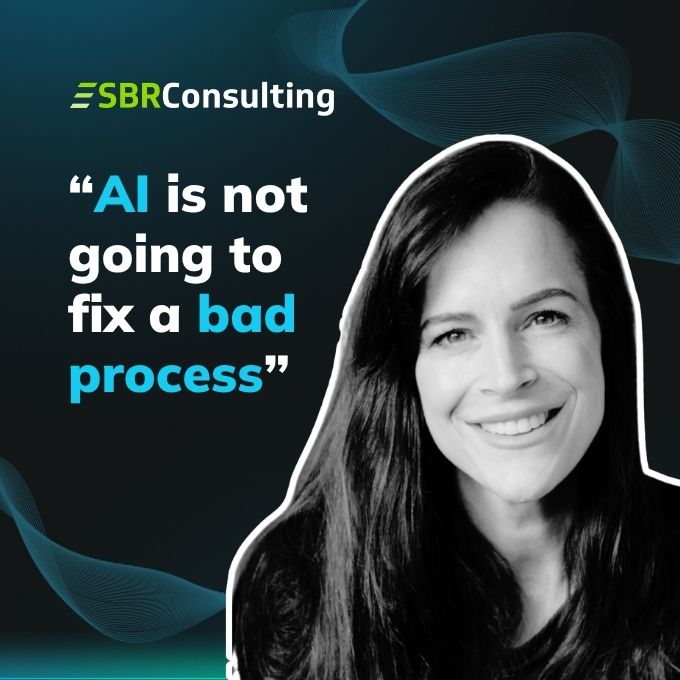
"You have AI done to you. And then you have AI done to you on a shaky foundation. Whatever you're building, you need to ensure your processes are robust, because AI is not going to fix a bad process."
That distinction between a firm that has a real process and one that's improvising is exactly what shows up next in the numbers.
How much time can a consulting firm save by cleaning up its CRM data before layering AI?
Dannii's own team has seen prospect research and meeting prep - previously up to an hour and a half per call - cut by roughly 70% once their CRM data and sales stage-gates are accurate and complete enough for AI agents to work from.
The mechanism is simple: AI prep agents can only be as good as the stage-gate data behind them. When that data is accurate, AI compresses hours of prep into a fraction of the time. When it isn't, in her words, it's "rubbish in, rubbish out"; the agent has nothing reliable to extrapolate from.
Inside a boutique, this shows up as one of the highest-leverage places to start with AI, precisely because time is the resource consultants complain about not having enough of. Getting even a portion of prep time back compounds across every call, every week, and every consultant on the team.
What makes this work isn't a fancier AI tool, but an unglamorous discipline: inputting the right information at every sales stage gate, using a consistent qualification methodology, and treating that data hygiene as the actual product of good sales operations rather than an afterthought to it.
"That's now reduced by seventy percent. Getting seventy percent back from every call for your prep is huge."
Saving that much prep time only matters if what AI produces afterwards can actually be trusted - which is where the risk gets sharper.
Why is AI hallucination such a big risk for consulting firms writing proposals?
AI hallucinations landing inside a client-facing proposal are "dangerous territory" for any consulting firm, because unlike an internal draft, a hallucinated fact or figure in a proposal for a significant six-figure engagement goes straight in front of the client with the firm's name on it.
As consulting firms push AI further into governance-heavy platforms and connect large language models to systems they don't fully control, the chance of an AI tool inventing a plausible-sounding but false detail. A hallucinated stat or client detail in a can be the difference between winning trust and losing it entirely for a firm selling into a highly regulated market.
Tools built to work only from a firm's own verified information (Dannii cites Notebook LM as one example) produce zero hallucinations precisely because they have nowhere else to pull from. The proposal-writing AI is only as trustworthy as the data it's tethered to.
"I've heard of hallucinations going into proposals - and if you're a consultancy selling something for significant six figures, that's dangerous territory."
All three of these findings point at the same underlying truth: the firms getting real value from AI in sales aren't the ones with the most tools, but rather the ones with the most defined operational foundation underneath those.
That's the gap CMap and CMap Intelligence are built to close: giving a consulting firm's whole team access to the operational hygiene that makes AI worth using in the first place, rather than something bolted onto a shaky foundation.



Okay. So, Dannii, delighted to have you with us. Just quickly for the audience, like, I'll I'll frame a little bit. We're fortunate. SBR Consulting are a client of ours. We have used SBR Consulting, for getting insights into our own BD and sales expertise. I know of plenty of people in the market who have also leveraged SBI SBR, sorry, for, further work around BD and sales.
Why don't you share with us a little bit of an overview about your background, your history, your role, what SBR do?
Yeah, sure. Thank you, Ben. So SBR, we are a growth and acceleration go to market consultancy.
And we typically work with organizations in financial services, professional services and tech.
And I guess where we really try and help close the gap with organizations is we're looking strategy through to effectiveness of people on the ground or processes and all the way through to execution.
And the reason why I joined SBR, I'm a fairly new recruit, I would say, of SBR, but mainly because I was working as an associate with them last year when I was doing my own consultancy and realized that I wanted more of that pie. Very greedy from sitting on the outside and thought what they're doing is phenomenal. And I wanted to be part of the of the journey and of the team. And the role that I play as a go to market consultant is I am more specializing mainly because it's a passion of mine, but on AI enablement, because I guess the era that we live in now, I think that the biggest piece that is missing in organizations is how we actually enable people with AI as opposed to throwing AI at people.
And a very quick whistle stop tour of my journey, Ben, because we do not have enough hours in the day to go through how old I am. But I've been working with sales professionals now for just under twenty five years, through individual contributor roles, through leadership roles, and then at the very latter, more enablement roles. So yes, I have a, I'd say a passion for hardship because that's what sales is, right?
But AI has made that a little bit easier. But yeah, I really enjoy working with organizations trying to help them solve challenges that they either don't have the capacity, the capability or the understanding to solve. So that's what we are here to do with SBR.
When I jump on a call with a consultancy, one of the top three things at the moment is about leveraging AI and particularly how to think about it from driving top line revenue growth, how to think about it in the sales and BD capacity, which obviously your area of expertise. It's the first point that we'd be covering off.
Let's step back a sec though, and just high level for the audience, like what impact are you seeing with the firms that you're working with with regards to AI?
What changes, what impact is it making in the sales and BD world at a very high level first?
Yeah. And it's really interesting, Ben, because a lot of the organisations that I speak to initially have this fear of, we're not doing enough, we should be doing this. And people have this, I guess, imagery of where they are on a journey in comparison to everybody else and feel like they're so far behind. But I think the truth of the matter is most people are kind of in the same area.
And there's a number of factors that I think are contributing to people not being as far developed as they'd really like to be. And I do believe that the impact if you have the right data to pull from, if the scaffolding and the infrastructure is orchestrated, well, the impact is huge.
But the reality of where people are right now, I mean, how many times in your career, Ben, have you heard people say, poor hygiene with with sellers, professionals, try and do your try and update that, try and update the systems like do this, do this, do this. And it's all about that activity, that input.
And it's, I guess it's always been the most the stickiest point of a of a seller's journey of a seller's day to day, because nobody really likes to do admin.
And I think previously, we could probably get away or hide or mask the fact that people don't really like to do admin because we're not, we're only looking at that count that outcome, we're looking at revenue. So as long as people are getting to revenue, there's little concern of what those input inputs look like initially, or what that data hygiene looks like initially, we just want those big numbers at the end. Where that's now changed is when when we think about AI and accelerating what you do through it through AI to get that output, to get those outcomes, your data needs to be immaculate.
So hiding behind bad data is no longer a it's no longer feasible if you want to get the impact from from AI. And I think that's kind of the realization that organizations are seeing right now. If you're a monster of a company of your enterprise, how many instances of the same system for Salesforce, for example, do you hear people having? Whereas I think if you're a smaller, more agile consultancy, you've got a little bit more, you've got you've got more of an ability to change what that looks like to maybe scrap and start again, as much as people wouldn't want to do that.
But you can you can certainly clean your data far easier than somebody who's got five instances of Salesforce.
It's reassuring in a way, because you're saying we're all in a similar situation. You're right, that FOMO has definitely taken hold, and you always feel like you're behind, and you're also spot on obviously about that data piece. And my next question was going to be where do you feel like the biggest opportunity for firms are?
I don't want to read into that, but no doubt there must be a link between what you're saying around leveraging data and that.
To get the optimal in to get the optimal outputs, you have to start with your data. And yes, there are there are elements of AI that can work around your data. But if you think about that kind of end to end process from prospecting all the way through to okay, this is a live opportunity, you have to have great data.
Because otherwise, you're kind of going back to some manual processes. And it yeah, it kind of mitigates the great stuff that you can get or reduces the impact of the great things that you can get by using AI workflows. So yeah, my my advice is clean your data, go back to having great data to fully get the optimised outputs of generative AI.
And I want to get your perspectives on how consulting sales is evolving, some of the pitfalls that firms should avoid and where to focus their time. But before we get into that, can you sprinkle a little bit of insight into some of the tools or ways that a boutique could better leverage, better capture some of that data to set them thinking set them off on that journey of discovery if they're not already there?
Yeah, so I think depends on whatever CRM that you use. So again, with a smaller firm, you might be using something like HubSpot, Salesforce, if it's if it's a bigger consultancy. So I would say like start with cleansing your data from a from a CRM perspective, because wherever you have your version of truth, I don't know, my camera's just frozen then hasn't it? I don't know if you can see that.
It's joys of virtual. Don't worry, Dannii. I think I expect everyone here is expecting the odd little freeze here and there, but at least you've frozen in a better spot than I usually freeze in.
I've definitely had some worse, worse bluffer faces. So we'll take it as that. So yeah, I think start wherever that single source of truth is, just ensure that that's optimized. So that would be a great starting point wherever that is, whether it's your CRM, I know some organisations will just use their project management tools like like CMAP. So just ensure that you are creating great behaviours around the information that you're putting in, because that will that will show dividends in the long run when you're trying to get more authentic in your workflows.
What would you say are some of the critical ones that people need to capture that you've observed maybe they're not?
So critical data points.
So I would say, in terms of info information on a on a on a prospect. So when you are updating deal stages, when you are even adding your commentary, if you don't use any level of conversational intelligence, which kind of closes that gap on the conversations that you're having, If you're doing things more manually, then just ensure that at every stage gate, so every sales stage gate, you're inputting the right information. And I'll give you a quick example as to why. So if you are inputting the right information from the correct buyers, what identifying what their problems are updating the forecasting history.
So if you're doing all those inputting all those data points, then when you use AI to do things like okay, med pick, for example, as a qualification framework, or we use our qualification framework is called in turbo. So if you're using a methodology, it can pull on that data if the data is accurate. So if you don't have those stage gate information, inputted into the system, the information that you'll get from generative AI, so any of these agents that you're using is not going to be accurate. So yeah, those stage gate information ensure that you put that ensure that you add that in things like your key persona details.
So yeah, it rubbish in rubbish out, unfortunately. So yeah, key personas ICPs ensure that stage gating.
And are you using tools like some of the LLMs or some AI point solutions to do some larger cohort analysis based on that data then?
Yeah, so we use HubSpot for, intent data.
So in terms of lead enrichment, and ensuring that we've got the right level of intent. So things that have been around for a while, really nothing too new in terms of if anybody's looking at any of our resources, of any areas on our websites, we will get notified immediately that that is a warm intent, if you like, and we have, we have scoring. So for us internally, that's how we would ensure that we are reaching out to prospects at the right time.
And I think without that information, it feels very cold. So I think any level of intent that you can get which with whichever tool is yeah, it's going to help with that that initial outreach.
And are you finding BD salespeople starting to leverage other tools like Clay or Claude or ChatGPT to do either any of that sort of analysis alongside a CRM, or indeed actually any of their other work?
Yes, I think the especially with the likes of clay and vibe coding, I think the reason especially if you're a small boutique, I think the reason why these platforms are getting so much more attention is because when you look at anthropic, the MCP, so the connections, the connectors, as they're called that you can have with Claude Anthropic are phenomenal. Whereas before you to connect any of your data to clay and to enter use it from an insight driven purpose is much more difficult to get that insight immediately. Whereas now like any of these large language models, like as I said, Anthropic OpenAI, they connect to these platforms so easily, you don't really need to learn how to use them, you just speak to the language model that you're using. And it will extrapolate extrapolate that data, and present it in a format that you can use easily. You don't kind of have to do that hard data, intelligence piece is it does it for you.
One of the areas I'm really keen to explore is how or why or even if consulting sales is changing. Lots of firms I speak to have got relationship heavy sales motions, there's selling based on trust and that expertise.
You meant you mentioned that sort of like FOMO ing into things. Is consulting sales at all being revolutionised or are you seeing it actually is more of a gradual evolution? And I guess if it's more of a gradual evolution but some parts are being revolutionised, I'd love to focus on that because that's the bit that's like high change, high impact.
Yeah. And so with the work that we do at SBR, so we do a lot of development from a capability perspective. And for us, we want to ensure that the capabilities that people are learning from like a value selling perspective. So if they're speaking to clients, first of all, we want to ensure do they have the right level of data and insight to have these great conversations. And previously, you'd have to do a lot of research to do that. So we could spend an hour and a half researching a particular prospect before we have a conversation.
That's now, I would say reduced by seventy percent. So getting seventy percent back from every call for your prep is huge. In a consultant's day, when time is the biggest commodities, though it's their time is the thing that you always hear people say they don't have. So when you can immediately give people time back by just optimizing that part of the process from prep, that's most certainly the biggest win.
But what we try and do with SBR is not only we're doing meeting prep, but we're basing or underpinning that on our frameworks on our methodology. So we're not just doing prep for the sake of prep. Are when we are using agents to do this, we're ensuring that it's underpinned by the things that we do daily, day in and day out that we know is best practice. So that would be that would be one part leveraging, agents for, I would say, high end prep, to ensure that you put yourself in the best position for clients.
Then we have an example of that.
Yeah, so with with our methodology, so we don't, we don't just do the market research piece, which we would recommend everybody to do. So you want to understand from a SWOT analysis from a pestle analysis. So we would already train our agents to ensure that they're doing that as a basis.
But I know there are plenty of platforms out there, large language models that will do that market research for you as well. So you'll have like with Anthropic, they'll have their own market research agents.
With copilot, they'll have their own market research agent. The part that we do as a different differentiator is we then bake other parts of our methodology into that prep. So that could be the way we ask questions that could be the social proof that we use.
And as an example, so when we are pulling social proof, so we call it third party validation from our existing clients before the world of AI, that would take us a very long time, and probably very similar to a number of listeners out there, would need to go into SharePoint or you would need to look through a Teams chat or you'd need to look through archives of files and case studies to find what is what is that value that my client is going to find interesting for the right sector, for the right size, for the right problem solve. That takes a really long time because you've got to search all of these various different sources to get that information. Whereas we we've built an agent that pulls all that together, depending on the prospect that you're speaking to. So no more searching, no more looking for that best case that's relative to that industry. So as you can imagine, not only is that really impactful, but that's a huge time saver for consultants.
So we kind of wrap all that. So in terms of what does what does great look like? What does exceptional look like for a consultant, not just working with SBR, but for our clients when we're when we're delivering these processes and methodology methodologies, we want to ensure that that's all baked into our agentic flows.
So I say that's a certainly the the biggest advantage is being able to build based on, based on our methodology to get the best outcome.
First off, that sounds really cool. Secondly, it sounds definitely like a well established ROI. I would love to know the actual like, how you did that. Like, you've so you probably went on a journey.
Right? You or a firm would, who's this is this. They realize we haven't got a huge amount of data. So first, you need to make sure that people follow a process, add the data that an AI can leverage.
You've then got a framework. Right? You input that into an AI agent, and then you build on top of it. Like, I don't want to go too deep, too practical, but I feel like there's something in there that everyone can get some value from.
Yeah, and I think it goes back to, I think especially when it comes to AI and what's available to people today, especially in some of the bigger organizations that we work with, and whether this will resonate with the audience as well at all, that AI just sometimes put on people.
So in terms of what great looks like, it's okay, we've now got Copilot, use it. We've now got anthropic use Claude.
There hasn't ever been that layer of enablement to really give people the understanding of how do I get the best from this? Everybody can put in an instruction. I want to research this client, and it will bring you back average results. So what we I guess what we're trying to refrain from doing is doing average things to get average results.
So when we when we're kind of when we're building this out, we want to so we want to firstly ensure that can we do it on our own infrastructure, because there are limitations on any of your own infrastructure, but you've got to have that layer of governance.
And I guess the biggest appeal to something like Copilot Microsoft, yes, it might not be as, as agile and as easy to use as the Anthropics and the the open AIs, but the governance around it is fantastic. So to have that access to all of your all of your like folder structures to all of your communication is yes, certainly has the has the biggest benefit. So when we're building is like anything, you have AI done to you. And then you have AI done to you on a shaky foundation.
So with anything that you're building out, you need to ensure that those processes that you have are robust, because AI is not going to fix a bad process. And I think this is some of the gaps that we're seeing is we want to be able to do this.
But what is the process that you normally do? Or we don't normally do it that way.
Well, AI can't be really good at that if you don't already have a strong process that it can actually follow because the result is in the evaluation. So how do you know what you're evaluating from the result AI is providing you if you don't have that kind of that grounding to begin with. So strong processes, you can't avoid that you need to really lock down on what great looks like from your process perspective, and thinking and even outside the box.
Okay, typically, maybe this is how we did it as an organization. But if we were to stretch our thinking and be really innovative, what would amazing look like as a top performing consultancy? What are all the things that we would love to do, but none of us have time to do? And start building that into your process because AI will certainly be able to to do that for you.
I love that we spend more time initially thinking about how AI AI can be used in sales and BD within the context of it being within the constraints of the existing business and the existing process rather than what I feel like intrinsically most people want to do is chase how AI can be used to generate more leads, for example, or deliver a proposal in a quicker manner, something that's a little bit more front end focused. With that said, have you seen any examples of that more front end usage of AI coming to the fore?
Yeah, it's what feels like a quick win for people, isn't it? So you'll see on LinkedIn, there are plenty of organizations out there who say, I can get you this many leads in this length of time or proposal builders, whatever it might look like the quick wins. But going back to that kind of average in average out, it's not always taking the kind of the best in class or the best processes. And I think where we're moving into is, yes, AI makes us faster. But if it's not using your unique methodology, then you're going be the same as everybody else. And I think that's that's the layer that we're seeing right now is it's all feeling very similar.
And no doubt there's there's plenty of people on this call right now that have had prospecting emails through into their LinkedIn inbox. And it's horrendous. And I think what we're seeing now is a scale like the scale of mass rubbish.
Whereas before people would send really bad emails, and you would get a few but now we're kind of scaling that that that, I would say poor quality.
And this is where I think people have the opportunity to win. Because it was it was seeing mass prospecting using all these tools that can be very good. I think if you're a transactional, if you're in transactional sales, there's probably a good a good place for high volume prospecting. And some of those tools will work really well.
You have Outreach, Apollo, Ample Market that they're all very good at what they do. If you're probably more transactional based, however, I think if you're if you're more about if you if you have more of a value proposition that's a little bit more consultative. I think that kind of throwing it out there and hoping that it sticks isn't isn't the best approach right now. And everybody's doing the same thing.
So you can tell what tools that they're using. So I get that said, Oh, hi, Dannii, I see that you really enjoy AI and emotional intelligence. It's like the same script from every single prospector. So now I know, okay, it's AI generated.
And I think we're going to become a little bit immune to AI prospecting, because it all feels the same.
I think we'll, although we're moving forward in AI, I do think that human connection piece, that human authenticity is going to almost move backwards where we're going to want more of it, because we'll use bots for things that we need to use bots for. But when we actually want that kind of that connection through LinkedIn, we want people to be a little bit more genuine and sincere. So yeah, I would say if you've got high profile like tier one accounts that you're going after from a prospecting perspective, be more creative, put more effort into the approach as opposed to just sending out a very generic AI response that everybody else is sending out that looks like it's tailored, but it's really not. I think there's just a little bit more thought into how you can solve their problem, as opposed to, yeah, just regurgitating what AI would send out.
Would you say that would be probably the most common pitfall that you are observing people fall into the trap around?
Yes, I think and because it's because it's news, and people are jumping onto it is that next shiny new tool. So which is why I think an organisation would see as the Oh, this is the low hanging fruit. And like I said, that there definitely is the place for it. But there's an and it's changing all the time. So I know some of these AI prospecting tools are now looking at other areas to try and attract attention as opposed to just grabbing a couple of lines that they see from AI. So it's looking more at challenges that they feel that particular industry might be suffering from with something a little bit more detailed and pulling in some case studies.
So I think that level of personalization will definitely get people's attention. But I think it Yeah, I think it's just what value do you want to show? Do you want to try and engage a prospect with when you're looking at prospecting tools that are sending out hundreds of emails each day? I think just maybe take a step back and think that might be good for tier three, but tier ones I'm going to keep the human approach for and try and cut through the noise that way, because it is a lot there is a lot of noise out there right now, isn't there? So, yeah, I think just be careful how you segment your clients and how you're, prospecting, because I think anybody that is doing the kind of the very typical SDR role is being replaced by AI SDRs. And that will definitely be the future, if not now.
There's loads of good things happening in the chat, by the way, Dannii, and somebody sent me, there's some questions in the q and a. So let me ask one of them because things really relevant now. So they're talking about they already feel comfortable in terms of, like, using AI, within the business in the sort of situations that you've described. They're not comfortable using it for outbound. However, a lot of their prospects are, like, longer deal cycles, need some nurturing. Have you seen any good examples of AI being used in that context?
For nurturing, you mean?
I think the great yes, and I think the great thing about using AI for nurturing is the value the value led proposition. And what I mean by that is, it's very difficult for a seller to keep an eye on what's happening with their potential clients. So they're nurturing clients from a how can I be more insight led? How can I be more data driven?
How can I provide them something that's going to make them stop and think that takes a lot of time to do on a on a nurture campaign? And I think that's the part where AI can really pay dividends, because it will do all of that for you. So if you have a list, for example, of your top one hundred nurture clients, and you have some and you have an agent that's looking at those clients on a regular basis, against those clients is looking at what is the what is the news, what is the market intelligence, and then it's feeding you back information to say, these three clients, something important has happened in the market that might be relative to them, reach out with this message.
Like, brilliant, we couldn't do that before you would have to literally go through every client, find what's interesting, or you're sending them generic campaigns, which might not be relative. So people want to hear what's relative to them, how you can challenge their thought process, their processes, their way of thinking. And I do think leveraging, agents to keep an eye on who your nurture clients are and just provide you that real data, that real insight is a, yeah, is is a is a huge leap.
And have you been building your own agents on top of Copilot or an LLM? Or have you been leveraging existing AI in core SaaS platforms that you've already got?
I would say a little bit of both. But due to so and I think this is what organizations are experiencing, not just us. So you have a so you've got a platform. Let's just take Salesforce or HubSpot, for example.
Does what it does as standard. Nobody really likes using them because they're like they're very complex for a number of different reasons. And it's an other admin that you need to do. So then they layer the agent force or these agentic flows across their platforms. And you think, brilliant, I now don't have to do that heavy lifting. They've got agents that can do it for me.
Up goes the price to a point that people are like, actually, it's not worth it. I don't want to spend that much money on their native inbuilt agents because I'm already paying for XYZ. That's already promising they can do all of this additional agentic stuff. So what I'm hearing from the market is they might have Salesforce, they might use HubSpot, but they don't want to pay for the premium licenses, because it's very expensive when you're rolling that out to all your team to have the yet to have the the agentic ability. So they're using their so for example, with us, we have copilot. And that's what that's that's got the right compliance, the right governance.
And we can build agents that can look at data in Salesforce that can look in data in any of our like any existing platforms like C map, we can we can get those two talking by having connectors within those agents. So for us, it doesn't make much sense for us to pay for the agent like agent force and Salesforce, when we can do a lot of that stuff natively and copilot. And that's what I'm hearing with a lot of organizations is they don't want to keep buying more tools, they don't want to keep buying more premiums, because even in Microsoft, it's a premium to have the best agentic capabilities. It's a premium and every tool that you have. So I think people are trying to make the best of what they have. If you're a Gemini house, you're going to want to use gems and build that build your infrastructure using what you have available to you. So yeah, I think even I speak to a client yesterday who were using slack.
And the the agentic layer on slack is very expensive. So they're like, okay, maybe we won't use that we'll keep we'll keep to what we're using in this area.
So yeah, I think if you're using Anthropic, then you can build really well in Anthropic in terms of all the integrations and connectors to not you need to use the AI that's available in the, in the third party product.
What's your perspective on whether that creates another data silo?
It shouldn't if you are so there's there's talks of a headless CRM. So Salesforce, they realize that they're not getting the adoption that they want from agents from agent force. So they're talking about this headless CRM where you use your large language model, and you ask your so let's just say it's Copilot. You ask your Copilot all the questions that you would naturally interact with, because that's your space.
That's where you're living most of the time and in teams or wherever it might be. And it's pulling the information that you need from Salesforce. So you actually don't even need to go into Salesforce. So that's the reason why it become headless.
So if a for example, if you've got conversational intelligence, which is the transcribers that monitor your calls, in an ideal world that should be posted straight to Salesforce, you don't need to go into Salesforce, then you interact with your large language model, it pulls that information back to your large language model. You say yes, this went really well, this is what I need to do it then post it back to Salesforce. So you have all of these integrations where the end user just needs to stay into one place.
They don't need to go in and out of different platforms.
So that's where people are going to. But I think it's just because this is also quite embryonic for organizations to try and build those pathways from copilot to Salesforce.
Some people are a little bit more risk averse when it comes to platforms outside of Copilot. So if you're an Anthropic house or OpenAI, I know there's still a lot of governance concerns when you're connecting some of your Salesforce instances with other large language models. So and I think that's probably what's stopping people from the velocity that they want to see with agents. It's the sounds risky, or the their organizations are cramping down hard. And they can't always use the the systems that they want to, which then causes ghost AI.
Right. And hallucinations, I've heard of going into proposals or whatever. And if you're a consultancy selling something for significant six figures, that's dangerous territory. Also even if aside from the value of the proposal to yourself, like if your end client is in a highly regulated market or sensitive part like one of those little things so I understand it, we're on a journey and I think that goes back to your original point as well.
What are some of the things that you advise businesses to do and what do you do yourselves to keep on top of it because like, one of the things I would love to do today on this session and others is address, like, the reality versus FOMO. And if there is a lot of FOMO, like, how do you keep this how do you step back from that? What are some of the things that, you know, you yourselves are doing what you've seen in other firms?
Yeah, and I think this is a problem that everybody's facing because it's moving so quickly. And I know I was only having a conversation with somebody recently that AI is supposed to be giving us time back. And I find now I'm actually working more hours and harder than I've ever worked before, because I'm trying to keep on top of AI. And that is a full time job in itself. And there's so much information out there, so many different tools. And even when you were talking about hallucinations, I think what people don't realize is even so if you're if you're a Gemini Enterprise house, so everything's on on Gemini, if you were to use something like notebook LM, that's completely grounded in your information in your research in your company intel, so it doesn't hallucinate.
So if you're if you're if you're creating proposals, that's a great place to start. Because you know, there's zero hallucinations, because it's grounded on your information. So there are things that you can do to overcome some of these challenges. But you need to be aware of what they are in the market. And I would say the best way there's we're inundated with information on what we can use what we shouldn't be using, how we can do this faster, how we can build this quicker.
And as I said, it does become very overwhelming. But what I would say is don't let that stop you from starting.
Because we're not going to avoid this. Like this isn't a this isn't something that's going to slow down is only going to get faster. If you've got the governance and compliance in a particular environment, whatever that environment is, whatever that sandbox environment you're given, use it. But when I say use it, I would also caveat that organizations need to get people into AI enabled people.
So what we're seeing is, as I mentioned previously, is people being done to you need to know we bought this large language model, Anthropic, Copilot, premium, whatever it might be, now you need to use it.
And there isn't a consistency, there isn't a everyone's using it in different way, everyone's getting different outputs, you can solve that problem really quickly. If you bring somebody in or you have a specific role internally, who AI enables people. And that's essentially what we're doing. We want to when we're rolling out a program or our own methodology, we can't just say, off you go, I hope you can create a really good agent that's going to help you do this now.
We want to be able to give people the scaffolding to say, if your people are now going to do this thing in a different way, whether it's prospecting, whether it's proposal writing, whether it's value creation, here is a way that you can build your agent. And this is how your people should be using it to get the same consistency to get the same results, as opposed to everybody having an idea of what they should do. But when it comes to the reality, they're all doing it in different ways and saying it's rubbish, I'm not using it anymore. It's hallucinated.
But the reason why it's hallucinated is because you're not using your grounded company information. You're using a web search, and now it's pulling in external. So I think there's just so many gaps in people's knowledge. Whereas we just started to eliminate some of those gaps, we would see really great results in organizations because everybody's using it the same way, as opposed to I think this is it.
And also comes back to another point you made, which is like, you need to have your own data that the AI can leverage. It's not a magic wand. You can't wave it, and all of a sudden, you're get highly predictive outcomes. Like Yeah.
You need to have invested and there is some grunt manual work that probably goes into that in the first instance, but then at least you can build upon something. You touched on something which I find fascinating, which is like, you don't feel like you've ever worked so hard, but your AI especially gives this time back. Like, I bet that resonates with a lot of people. So do you feel like you are more productive?
Do you feel like you're like, it's actually driving higher value and better outcomes, or are we just in a bit of a a fog at the moment?
I would say I am absolutely amazed every time I use AI.
Productivity, one hundred percent. The part where I'd say I invest so much of my time is I need to learn about because we don't, we use a model internally, but our clients use different models. So the reason why I have to work is not like one shoe fits all. It's understanding the capabilities of all of the different models out there and it's changing every single week. Like it's really difficult to keep up with. So I'd say I spend a lot of my time developing and deploying various different workflows in different large language models. The other reason I spend where I spend so much more of my time to get better is evaluation.
So the hard piece is evaluating the agents that you build, because it's not a set and forget, you have to build the agent, then you need to keep evaluating the outputs, the outcomes that it's producing, be able to release it into the wild.
So and it's and it's redesigning your whole processes is redesigning the way that you think you can't keep doing the things that you did, and expecting AI to do it better, you have to reimagine a different way of doing things.
And that also takes time. Because, yes, you can go back and forth and say to AI, is what I want to be able to achieve, this is how I want to be able to achieve it. But the grounding that you give it is really important that context. And that's where that deep thinking really comes in, moving into a time of systems thinking.
And I think previously, we have all these props. So even if I think of SBR and other organizations that we work with, processes have been baked for a very long time because they work.
Now they don't really they may not work as well with AI. So we have to redevelop them. We have to reengineer them. So that's the part that's taken taken the time.
Once that's built, I say it's going to be done and it will just run. But then there'll be a new model out and I'll do something completely different again. But once you've got those that that hard part done and the building done, you can trust the results and you can just it's BAU and you will be much faster and you will be much more efficient. I would like it if I was in the place if somebody said, Hey, Dannii, I built this for you.
And I know it works. But unfortunately, I'm the person that's got to do that. So if I was a person receiving, then I'll be like, Woo hoo, thank you. Yes, I'm really productive.
So yeah, the outputs are incredible.
And I yeah, I don't see any other way forward. It's incredible. The way that we can engage now with our customers through using various different vibe coding and all this great stuff that makes an experience with our client much more interactive. Like I can mock something up that I would have to ask a developer to do to help my client visualize what we're going to produce for them.
And they're like, oh, this is amazing. So it's it's it's using it in those kind of day to day instances that has that given me productivity? Absolutely, because I'd to wait for a developer to do that. It might have taken me a little bit longer, but I've got to the outcome that I wanted by myself.
I've got quite strong views on that what I think the future of consulting sales is. I personally feel like you will need fewer BD people, and I think you just need a lower volume but of higher quality individuals who are highly leveraging AI and I think for those businesses, consultancies who rely less on a rainmaker and have got more of an embedded sales methodology in their firm where everybody's contributing to sales in different ways. If they're capturing the data and the insight, whether it's a junior delivery person, you just hear something on a call and that's being transcribed and goes into an area or it's a more senior person presenting a proposal and using AI to get reflections in that get so I that those are my perspective, but I guess final question for you before I go to a couple of the audience questions. What do you feel like is the the future of sales and BD and leveraging AI in consulting?
So I do think there's going to be much more alignment. And if you go into majority of organizations, what you often hear is misalignment. Delivery doesn't really talk to this, doesn't talk to this. And everyone's got a different idea on what the customer needs because they've heard different versions. So I definitely think the world we move into will be much more aligned and collaborative, because we can pull on data insights from everywhere now, not just from not just from one source. And the only person that's going to benefit is the client when you have more alignment, because you can see and access data collectively far, far quicker. So I think that part is definitely definitely going to change.
I also think, in terms of some of these BD roles, we're going to have like agent to agent buyers. So and even people are doing this now, if you need something, if you want to, if you want to use an organization, you're using research through through AI to find that. So I think that that buying piece initially, it's not going to be people going on to websites, it's not going to be people waiting for a BD person to call, because the knowledge of a, let's say an SDR or a more junior BD, they can find that out themselves. They don't need that person to do that. And actually, it probably will be far better from a knowledge perspective.
Whether Bio really want to speak to a consultant is I need somebody to challenge me. I need somebody to challenge my thinking.
I need somebody to to connect with me from an emotionally intelligent perspective.
So where I see things changing is we're going to have to be a downside better our human skills, our communication skills, our value value driven skills, to take the buyer on the journey that that's kind of all like, maybe like sixty percent of the way there.
Just because of the nature of the information that they'll have before they even speak to a person. So I think just being poorly equipped or, not not leveraging the skills of an exceptional consultant, I think you that's where you'll be left behind. Because people I think when you're ready to speak to somebody, you want someone exceptional. And to be exceptional, you need to keep practicing, you need to keep working on your skills, You can't rest on your laurels. You need to keep developing yourself. So you show, so you show that client that your time is worthy. I'm a credible trusted adviser.
And this is and this is why.
I agree with that. I've seen data that suggests that a ever decreasing percentage of people want human interaction involved in sales process that will apply to consulting no matter what consultees want to believe. There's I interviewed, a really fast growth agency Foundation Inc based out of Canada doing like two fifty percent year on year growth and a huge percentage of their inbound and tied revenue comes from AI based search or people not involving humans. So therefore, that human interaction needs to come in, it's essential. I just wanna do some quick fire questions, Dannii, because we're short on time. There's a really interesting point around, you know, a lot of what we focus on is individual productivity, And the idea is like, how do we go from me to we? So like how do if you've got a perspective, a succinct view on like how you would better leverage AI, I guess the perception here is like across a business rather than for individuals, that'd be great.
And it goes back to this philosophy hasn't changed from decades of working with organizations when it comes to those people that do things, especially in a sales environment, I used to call sellers or describe them very similar to toddlers. They don't like to share when they're doing something really great. They want to be at the top of that leaderboard by themselves. And this is where I think we're starting to see an element of that now as well.
So when somebody is doing something really well, whether it's they've just created an incredible skill on Claude or whatever that might be, it's keep that to myself because I've now I'm now really productive. And I can say I've done all this I've done all this work, but really it's only taking me half an hour and would keep that to themselves. So when we come into an organization, we try and elicit all of those great things that high performers do and put it into a channel where they can share best practice, whether that's things like we would share great call recordings, or we would share great customer stories, whatever that looked like, that's going to have to be now translated into AI as well.
So when you're doing that great, great thing with AI, whether it's as I said, you've built a skill, or you've created your own agents, however that looks, I think organizations need to be really conscious that they need to create a platform for that to be shared, and almost put like an incentive around it. So it might be that whether it's weekly, biweekly, monthly, it could be that you have a not necessarily a competition, but an outlet where people have to come forward with what have you what have you utilised this this month? And what output has it given you? What outcome has it given you?
So you're almost encouraging people to share.
And I think that's where people are going to start winning. Because when you're doing things on your own, you're only going to get as far as you can get, you do things collectively, and share some of the great results that you get just by day to day, then yeah, I think, that's when the whole organisation will really benefit. But it takes that one person to be the catalyst that share something reciprocity, right? You share something, you give something, then you feel like you need to kind of give something back. So yes, I would say be that changemaker in the organisation that's sharing and try and encourage people to share some of those practices back that way you've got shared knowledge.
Just so everyone's aware, we've got a couple of minutes before this next session is scheduled to start. So like if you need to have a quick break before we roll into the big investor and exit pitfalls in twenty twenty six, keep the street open, go back, come back. But we do have a few more questions, Dannii.
Maybe just to I was going to try and give us all a gap that's obviously failed session one already behind schedule, but for those that want to listen to questions there's a couple of really good ones.
First one is how can you use AI to help identify potential clients who are actively looking for help? Have you got some perspectives on that? That was a question from an audience member.
So if they're actively looking for help, so I guess you probably don't know the context. So identifying clients who may need your services, is that kind of what works?
I think of it in two ways actually. I think of like, are there tools out there that can help you identify potential clients broadly? And my getting signal is think of a tool like Clay, and then there's also like maybe is there some AI tooling that will produce some of those signals that I think you mentioned about earlier, like maybe somebody's in a buying process but not reached out. Those would be the two components to it.
Yeah, so as you mentioned, Clay, for sure, in terms of identifying prospects, but even a step before that ensuring that you really have locked down who your ICP is, so your ideal client profile. Where we're seeing people get misaligned when it comes to their prospecting efforts is not really identifying that ICP that they need to be going after. So really knuckle down on the ICP first of all, but once you so tools like Apollo and AmpleMarket that I mentioned before, again, they all have great sequencing. Yes, they do come at a high price, but very good at nurturing with intent basis.
But also if you have a list, you can feed your list into if you're using Clawed Anthropic, if you've got a list, I've tried this before and it does work. I'll put my list into Claude Anthropic and it will create based on what it knows on those clients based on the research that it can do a really nice sequence, whether it's three, four or five, however many emails that you want to create. But it tailors those sequences based on what it knows on that particular client in the market. So again, that might save a little bit of time if you're doing things without paying for a tool, or if you do want to utilise the tools like Outreach, Apollo, Ample Market, they do that leveraging for you.
What are some of the best in class processes that work well for early stage prospecting? Great question, by the way, that.
For early stage prospecting, so I would say preparation. So what I mean by preparation, so if you have I know are we thinking here we've got a target prospect list, or is this before we actually have, like, a prospect meeting?
I I would go with you've already you nailed your ICP. You know who your prospect list is, but you wanna, like, them warmed up.
Okay. So and being data and insight driven, people going back to that reciprocity reciprocity, in terms of best in class processes, your your clients, potential clients, nobody wants to be sold to. So we talk about creating a buying environment. And when you're creating a buying environment, you're not creating a selling environment.
Because the moment that your client feels that you're selling to them, they will stop backing off. So think about how you can create a buying environment by the act of reciprocity. So what can you give them? What can you tell them that they may have not already known?
And there's a really easy approach of thinking, what do you want them to know? How do you want to feel? What do you want them to do with that particular campaign that you're sending out. And if you just think that way very, like very quickly, when you're getting into getting into that mode, you'll have a better opportunity of connecting with your clients.
Love that, Dannii, I've got that written on my paper for today, when I'm thinking about the audience learn feel do.
Yeah. Right.
Look, it's been a pleasure as always. Really appreciate your insights and getting ConCon started for us.
Loads of engagement in the chat, some fantastic questions from the audience.
Is there any final thoughts or remarks from you?
No, I would say other than don't be afraid of using it, try and be that champion in your business to push forward and yeah, reach out to people in that like there's so many there's such a great AI community out there as well for sales. So just get involved, speak to people, have conversations, and hopefully that should take away some of the fear of where you are.
It's also worth noting there is only one Dani Mathers on LinkedIn. So search for Dani, connect with her, and I'm sure that will fill your feed with great insights as well. If you want to know more about SBR Consulting, sbrconsulting dot com is their URL, as I've mentioned at the top, they do some phenomenal work with lots of different types of clients. And, yeah, Dannii, great to see you again. Thanks ever so much.
Thank you, Ben.
Great to see you.
See you soon. Bye.
Join the story live
Sign up to upcoming webinars and live demos with industry experts
The eight-figure wall: Why consultancies stall & how to break through
See the firm that doesn't run on its founder. 2-part live demo series.
Ready to transform your operations with CMap?
CMap replaces your existing homegrown systems, centralizes your data, and solves your ops pain


